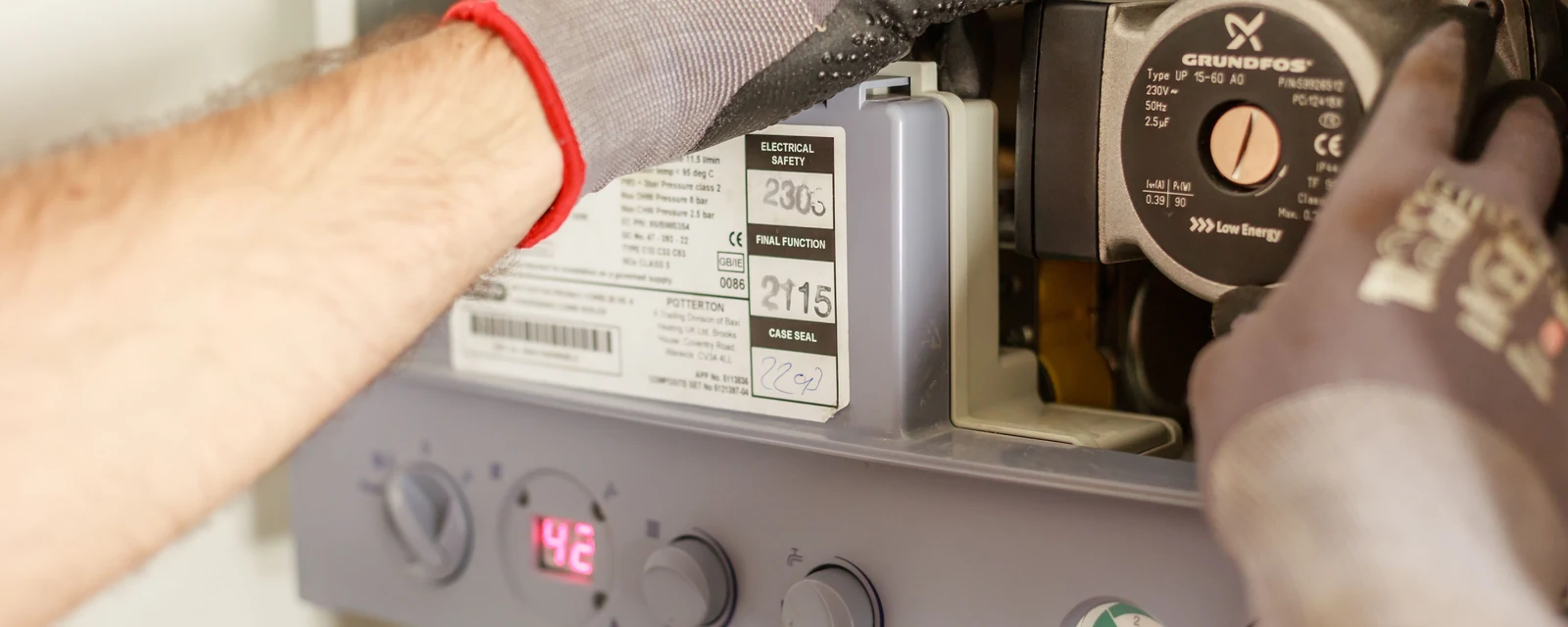
Water heater installation in Winter Springs, FL is the work of setting a new unit, connecting water, fuel or power, venting it and proving it works. The part that decides how well it lasts is the planning done before the old tank leaves the house.
Location, venting, an expansion tank and a drain path for the relief valve all have to be settled first. We walk the space with you, check what the house already provides and give a clear price before work starts. If the old unit has already failed, our water heater replacement page covers the urgent version.
Where the heater goes decides most of the job
A garage, utility room, closet and attic each carry different risks. A garage unit sits low and is easy to reach but needs protection from vehicles. An attic unit needs a drain pan with a drain line that actually runs outdoors, because a leak up there arrives through the ceiling.
Clearances matter too. Gas units need combustion air and vent clearance, and heat pump models need open airspace around the top. We measure the doorway and the path to the spot before anyone orders a 50 gallon tank that will not fit through a closet door.
Fuel and unit types compared before you order
Every option works. The right one depends on what the house already has and what you want to change.
| Unit | What the house must provide | Planning point |
|---|---|---|
| Electric tank | A dedicated circuit and breaker of the right size | No vent needed, simplest location rules |
| Gas tank | Gas supply, combustion air and a vent path | Vent condition and clearance are checked first |
| Hybrid heat pump tank | Electric circuit, airspace and a condensate drain | Cools and dries the room around it |
| Tankless | Large gas or electric supply and exhaust | Often needs gas line and vent upgrades |
Check the unit's rated input and the manufacturer's installation manual before ordering.
Venting and combustion air for gas units
A gas water heater makes exhaust that must leave the house. Getting that path wrong is the one mistake that can hurt people.
Draft hood and flue
Atmospheric units use the chimney effect, so the flue pipe needs the right rise and a tight, sealed route to the outdoors.
Power-vent and direct-vent
A fan or a sealed pipe pushes exhaust out through a wall or roof, which is common when a house has no usable flue.
Combustion air
A closet with no air supply can starve the burner. We check for louvers or other open air before we connect gas.
Carbon monoxide detection
A working detector on that level of the home is a sensible part of any gas appliance install.
Planning a new water heater?
Call (407) 964-8940 and describe the space. We will tell you what to prepare.
Expansion tank, relief valve and pressure
Heating water makes it expand. In a closed system with a check valve or pressure regulator at the meter, that extra volume has nowhere to go, so pressure spikes every time the burner or element runs. An expansion tank gives the water a place to go.
The relief valve is the last safety. Its discharge pipe must run to a safe drain or outdoors, not into a cap or a bucket. We use new flexible connectors and shutoff valves, and we check the pressure at a hose bib before we leave.
Startup and handoff
The install is not finished when the water runs hot. These last steps are what separate a working heater from a safe one.
Leak check under pressure
We open the supply, bleed air at a hot tap and watch each joint and connector for seepage.
Light or energize
Gas units are lit and the flame is checked. Electric units get a voltage and amperage check at the elements.
Set the temperature
We set the thermostat to a safe level for your household and explain how to adjust it.
Show you the shutoffs
You see the cold valve, the breaker or gas control and the relief valve, so you know what to close if something goes wrong.
What year was your Winter Springs home built?
Winter Springs has homes from the 1970s onward, such as those in the Tuscawilla development that grew around the 1971 country club, so pipe age differs by subdivision. We ask what year your home was built because it tells us what the shutoffs, supply lines and old vent might look like.
We do not guess at pipe materials from the street name. We look at the lines at the heater, and if they show corrosion we say so before connecting new equipment to them. Homes with older plumbing may also benefit from a conversation about repiping down the line.
Permits and inspection questions
Permit rules vary, so ask the Winter Springs building department at 1126 East State Road 434. Its application says a separate permit must be secured for electrical work, plumbing and signs. It does not say whether water heaters are exempt, and we will not claim they are.
Whatever the answer, a licensed plumber should do the work. You can check any license on the state's Verify a Licensee search before you sign anything.
What to settle before install day
A few decisions made ahead of time keep the visit short.
- Pick the fuel type and tank size
- Clear a path to the heater location
- Know where the main water valve is
- Note the age of the old unit and any past leaks
- Decide whether to add a drain pan or leak alarm
- Ask whether the building department wants a permit
What goes into the price of a new installation
Two houses with the same heater model can have quite different totals. These are the reasons.
Heater type and capacity
Tank, hybrid and tankless units differ in price and in the support work they need.
Venting changes
A new vent run, liner or power-vent adds materials and labor.
Gas, electric or water line updates
Larger gas lines, new circuits and moved shutoffs add work beyond the heater.
Safety parts
Expansion tank, relief valve, drain pan and sediment trap each have a part cost.
Permit and disposal
Permit fees, where required, and old-unit removal are included in the plan.
A planned upgrade is not an insured loss, so expect to pay for the new unit yourself. If the old tank leaked and damaged the area first, that damage may be covered, so ask your insurer what they need from you.
You hear the price before work starts. If the job also involves new fixtures or lines, plumbing installation can often be planned into the same visit.
Water Heater Installation questions answered
Often yes. If a check valve or pressure regulator keeps water from flowing back into the street, heated water has nowhere to expand. We check for a closed system and install a tank when it applies.
Sometimes. Moving it changes supply lines, venting or wiring, and may need a drain route for the relief valve. We confirm clearances and path before we promise a move.
It depends on household size, bathrooms and when people shower. A larger tank holds more reserve and a smaller one saves space. We talk through your habits, then match the recovery rate to them.
Permit rules vary, so ask the Winter Springs building department. The city application requires a separate permit for plumbing and electrical work but does not say whether water heaters are exempt.
Maybe. Homes from the 1970s onward are common here, so ask what year your home was built and tell us. We inspect the lines at the heater and flag any corrosion before we connect.
Yes. We install across Seminole County, including Lake Mary, about 9 miles from our Winter Springs office. Give dispatch the street address and ZIP so we can plan the visit.
Yes. We coordinate access with the tenant and tell your management team the model and install date for the work order.
Our 24/7 dispatch takes calls any time. A planned install is scheduled in a normal window, and a failed heater is handled as an urgent job.
Ready to plan the install?
Call and tell us fuel type, tank size and where the heater sits today.