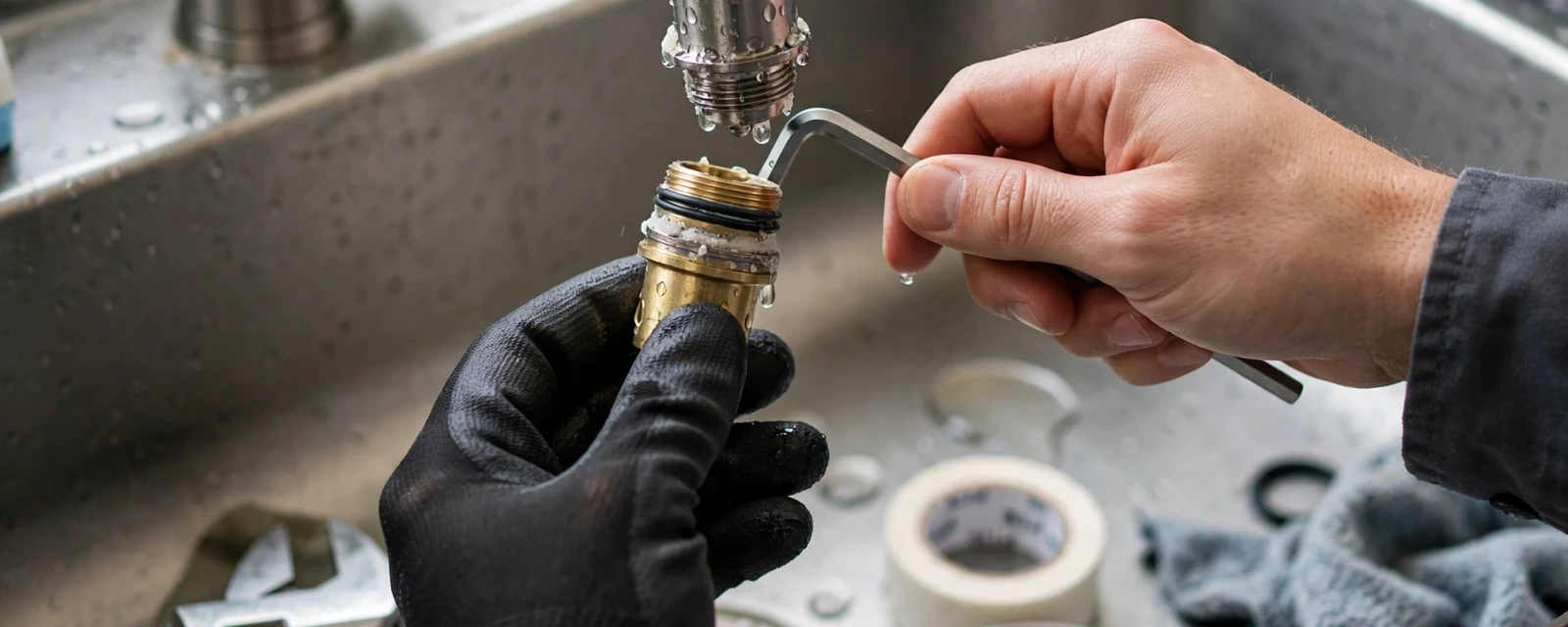
When a faucet handle comes off in your hand or a supply valve breaks and sprays, the first job is water control, and our 24/7 dispatch can walk you through it by phone. Look under the sink for the two small angle stops, turn each clockwise, and if they will not turn, shut the main valve where water enters the house.
Faucet repair in Winter Springs, FL covers the fixture itself, the valves that feed it, and the shower or tub controls behind the wall. We find whether the problem is a worn cartridge, a corroded stop or a bad connection, then repair or replace only what has failed.
When a valve breaks and sprays: do this first
A broken supply valve is the faucet problem that cannot wait. Old angle stops seize with mineral scale, then snap or leak at the stem when someone finally turns them. If the stop is spraying and will not close, go to the main shutoff, which is usually at the front of the house or at the meter box.
Once the water is off, open a faucet at the lowest point in the house to drain the lines, and move anything valuable out of the cabinet. Call us right away. Replacing a supply valve means cutting into the pipe, so it is not a good job for a first attempt with a wrench.
Faucet types and how they fail
The repair depends on the mechanism inside. Knowing which kind you have makes a phone diagnosis quicker.
| Type | How it fails | What we do |
|---|---|---|
| Compression, two handles | Rubber washer wears, drip from the spout | Replace washers and seats |
| Single-handle cartridge | O-rings wear, handle gets loose or leaks at the base | Swap the cartridge |
| Ceramic disc | Seals clog with sediment, handle feels gritty | Clean or replace the disc set |
| Ball type (kitchen) | Springs and seats wear, leak under the handle | Rebuild kit or new faucet |
| Shower and tub valve | Cartridge sticks, water runs hot or will not shut off | Replace cartridge or valve body |
Outdoor spigots, laundry sink faucets and cartridge swaps follow the same pattern, with a different part on the shelf.
Faucets, fixtures and the valves behind them
The part you see is rarely the whole problem. A faucet sits on a supply line, which connects to an angle stop, which connects to the pipe in the wall. Any of the three can leak, and each needs its own repair.
We check the stop and line whenever we work on the faucet, because replacing a faucet on a corroded stop only moves the leak. If the stop will not hold, we replace it with a quarter-turn valve that you can close firmly next time.
Fixture replacement is part of the work too. If you chose a new kitchen or bathroom faucet, bring it and we set it, check the supply connections and test for leaks at full pressure.
Hard water and your faucet
The city lists its average as 8 grains. Band names follow the USGS hardness scale and are shown as a general reference.
The city lists Winter Springs water at an average of 150 mg/L hardness, which it states as 8 grains. On the USGS scale, 121 to 180 mg/L counts as hard. That mineral content leaves chalky scale inside faucet aerators and around cartridges, so flow drops and handles stiffen.
Soaking a clogged aerator in vinegar clears light buildup. Never combine vinegar and bleach. Rinse the aerator fully between the two. If the cartridge is scaled, it usually needs replacement, since scraping damages the seals. A water softener or filtration system reduces the scale at the source.
A faucet or valve you cannot shut off
Close the main valve, then call (407) 964-8940 for 24/7 dispatch.
Shower and tub controls
Shower valves sit inside the wall, so the symptoms matter more than usual.
Water will not shut off
A worn cartridge or seat lets water through even with the handle off. Closing the main valve stops the drip until we replace the part.
Temperature swings
A pressure-balancing cartridge that has scaled up stops evening out hot and cold when someone flushes elsewhere.
Water leaks to the tub spout while showering
The diverter has worn and lets water leak through to the tub spout. Replacing the diverter or the spout fixes it.
Tub or shower drain backs up
Hair and soap block the strainer and trap first. If other fixtures are also slow, it is a drain line problem, and we move to drain cleaning.
Pink film and slow flow in local sinks
The city's utility division says pink residue in sinks is typically harmless fungi, not a sign of contaminated water. It suggests soaking aerators in a dilute bleach solution. Never combine vinegar and bleach. Rinse the aerator fully between the two. If the film keeps returning, ask the city utility division.
Low flow at one faucet but normal flow at the rest of the house points to the aerator or cartridge. Low flow everywhere is a pressure problem, which belongs under water line repair. We also take faucet calls from Casselberry and nearby towns.
What a faucet visit looks like
The visit is short for most faucets, and we explain each step.
Shut off and inspect
We close the stops, open the faucet to relieve pressure and look for corrosion on the line and valve.
Identify the mechanism
Brand, age and cartridge style decide whether a repair kit exists or replacement makes more sense.
Quote the work
You hear the price before we start, including any valve we recommend replacing.
Repair and test
After reassembly we run hot and cold, check under the sink for seepage, and clean the area.
What affects a faucet repair price
The gap between a quick fix and a bigger job comes down to a handful of things.
Repair kit or new faucet
A cartridge or washer swap costs less than a new faucet. Discontinued models often push the decision to replacement.
Supply stops and lines
Seized or leaking stops are replaced as part of the job, which adds parts and time.
Wall access
Shower valves behind tile may need an access panel or a cut in the wall.
Fixture you choose
A basic fixture and a designer one with a pull-down sprayer are very different parts.
After-hours dispatch
Ask whether the hour of the call affects the price. You hear the price before work starts.
A supply valve that bursts and soaks the vanity and the floor is sudden damage a policy may cover. A drip from a worn washer, or the faucet you replace because it is old, is not. Ask your insurer what applies to your policy.
Tell us the faucet brand if it is on the base or handle. It helps us line up the right cartridge before the visit.
Faucet Repair questions answered
Yes. Our 24/7 dispatch takes calls at night and on weekends, and same-day appointments are available when the schedule allows.
A sprayed valve is the case that matters most. Shut the main, call us, and describe what you see so we bring the right parts.
Usually yes. A drip is a worn washer, seat or cartridge, and the repair costs less than the water it wastes over a few months.
If the faucet is older and corroded, replacement may be better. We tell you which when we see it.
The aerator is the most common cause. Unscrew it, soak it, and rinse out the debris. Never combine vinegar and bleach. Rinse the aerator fully between the two. Scale from hard water is the usual blockage.
If the cartridge or stop is partly closed or scaled, we replace it. If pressure is low everywhere, call us for a different check.
Sometimes. Many cartridges come out from the front of the valve. If the valve body itself is leaking or the model is obsolete, access from behind or a tile cut is needed.
We tell you which before work begins.
The city's utility division describes pink residue as typically harmless fungi. A new faucet will not stop it from growing, but cleaning the aerator and wiping surfaces keeps it down.
If it keeps returning, ask the city utility division.
Yes. An outdoor spigot that drips from the stem needs new packing or a new valve. A spigot that leaks inside the wall needs more work and a different approach.
Laundry faucets follow the same repairs as kitchen ones.
Yes. Give us the unit, the fixture and the access details. We note the cause so you can tell wear from tenant damage, and we replace stops that keep failing.
A faucet that has stopped behaving
Call (407) 964-8940 and describe what it does. We will tell you what to try and what to leave alone.