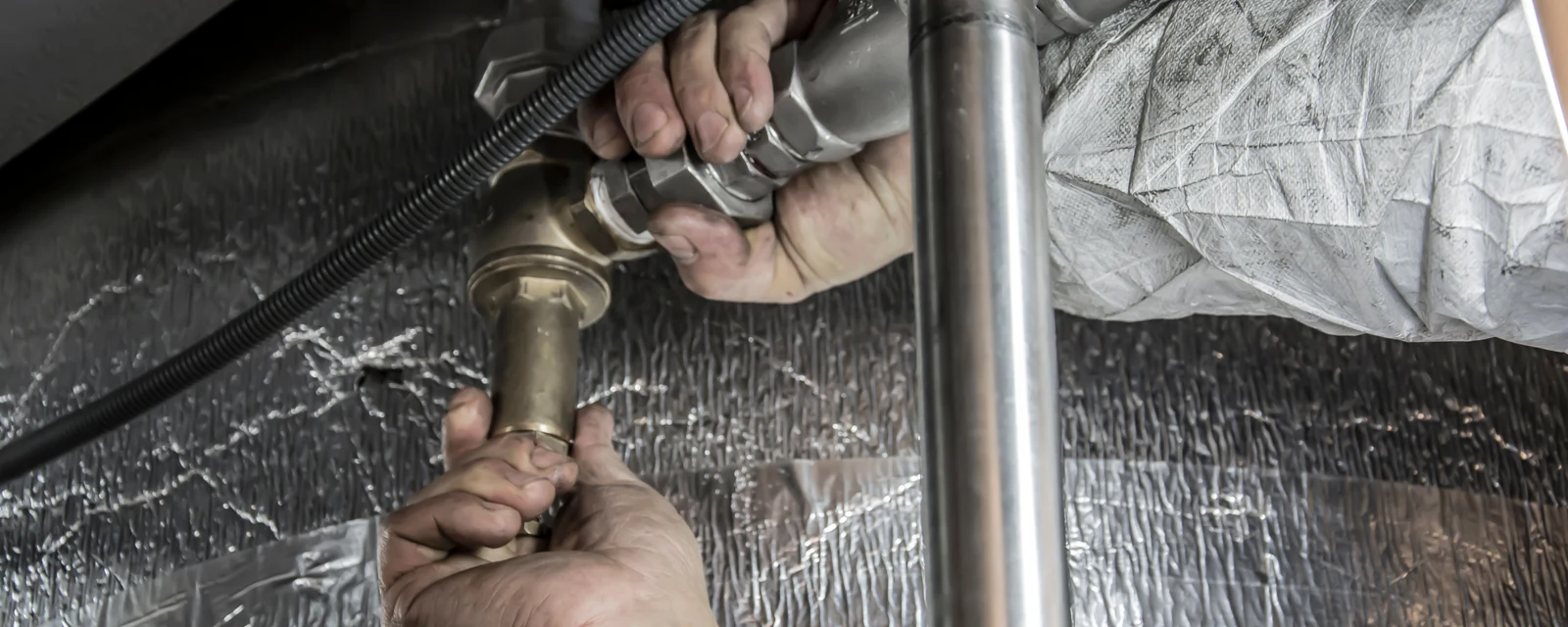
Leak detection in Winter Springs, FL is the work of locating a water leak you cannot see, using sound, heat, pressure and camera tools so the repair opens as little of your home as possible. A leak that is soaking drywall or running up your bill is urgent, and our 24/7 dispatch takes those calls at any hour.
While you wait, close the main shutoff valve, then open one low faucet to drain the lines. Move rugs and electronics away from the wet area. Cut power at the breaker only if the panel is dry and reachable without standing in water. Otherwise call.
Signs of a hidden leak you can check tonight
Most hidden leaks announce themselves long before a ceiling drops. Run through this list and note which ones apply, because the pattern tells us where to start looking.
- Watch the water meter with every fixture and appliance off.
- Listen for hissing or running water in a quiet house.
- Look for paint that bubbles, peels or turns brown in a patch.
- Press baseboards and the bottom of walls for a soft, damp feel.
- Check for musty smell in a closet, cabinet or hallway.
- Feel the floor for a warm or cool spot that never changes.
- Compare this month's water bill to the same month last year.
Meter still running with everything off
The water meter is the fastest test you own. Turn off every tap, the dishwasher, the washer and the ice maker. Then look at the meter's small leak indicator, usually a tiny triangle or dial. If it spins or ticks, water is leaving the pipes somewhere.
Next we narrow it down. Closing the main shutoff at the house and watching the meter splits the problem in two. If the meter still moves with the house valve closed, the leak is on the buried line between the meter and your home. If it stops, the leak is inside.
A toilet flapper that seeps is the most common false alarm, so we check that too. A few drops of dye in the tank will show a silent toilet leak in minutes, and that is a cheap thing to rule out before anyone brings out gear.
How we find a leak without opening the wall
No single tool finds every leak. We pick the method from the symptom and the pipe material, and we often combine two so one result confirms the other.
| Method | What it detects | Best used for | Limit |
|---|---|---|---|
| Acoustic listening | The hiss pressurized water makes escaping a pipe | Slab, buried and in-wall supply lines | Plastic pipe carries sound poorly |
| Thermal imaging | Temperature difference from wet material or a hot line | Ceilings, walls, radiant or hot water leaks | Shows where it is wet, not always the source |
| Pressure test | Whether an isolated line holds pressure | Confirming a suspected leaking line | Proves a leak exists, not where |
| Moisture meter | Moisture depth in drywall, wood and subfloor | Mapping the wet area after a leak | Cannot see inside a slab |
| Drain camera | Cracks and joints inside a drain pipe | Drain leaks and sewer lines | Needs a cleanout or access point |
A camera cannot see inside a slab or behind a wall of supply pipe, so we use sound and pressure for those.
Meter moving with every tap off?
Call (407) 964-8940 and we will talk through the meter test and book a leak search.
Ceiling stains and wet walls
A brown ring on a ceiling is rarely directly under the leak. Water runs along joists and pipes before it drips, so the stain can sit several feet from the source. We scan the area with a thermal camera and a moisture meter, then trace the wet path backward.
A bathroom above is the usual suspect, and the culprit is often a shower valve, a tub overflow gasket or a supply stop. Roof leaks look similar, so we confirm that water is running when the plumbing is turned on and stops when it is turned off.
Once we have a source, we cut the smallest opening that reaches it. A hole near the wet spot is cheaper to patch than an exploratory tear-out of the entire wall.
When a hidden leak is an emergency
Treat it as urgent if water is coming through a ceiling, the meter is spinning fast, there is water near outlets or the electrical panel, or a wall is visibly swelling. Shut the main and call our 24/7 line. Cut power at the breaker only if the panel is dry and reachable without standing in water.
A slow, steady seep is different. It still needs finding soon, because damp framing grows mold, but a same-day appointment when available is usually enough. Tell us which case you have when you call and we will schedule it that way.
Under the house and in crawlspaces
Where a home has a crawlspace or raised floor, you can sometimes see the leak directly. Look for wet insulation, drip marks on the subfloor, rusty hangers or damp soil under a bathroom.
We use a flashlight, a moisture meter and a pressure gauge, and we isolate each branch of supply piping to see which one drops pressure. Where the pipe is not reachable, listening gear finds the sound from above.
We do not crawl into a space that is flooded or unsafe. If water is standing near wiring, we will wait until it is made safe.
Leaks in buried lines
The buried pipe from the meter to the house is the hardest leak to spot. Wet lawn in a dry week, a soft patch in the yard, or low pressure through the whole house all point to it.
We confirm the line is the problem with the meter test above, then pinpoint it with listening equipment placed along the route and a pressure check. Digging is the last step, not the first. If the pipe needs to be replaced, our water line repair service picks up from there.
Irrigation, pool and meter-box leaks
A broken sprinkler head or a cracked irrigation lateral can mimic a house leak on your bill. We shut the sprinkler zones off and re-run the meter test. If the reading stops, the system is where we look next.
Pool and spa plumbing is a separate case. A pool that loses water can be evaporation or a leaking return line. We can pressure test supply and fill lines at the house side, but pool shell leaks need a pool specialist.
Wet ground around the meter box can be a leaking connection before the meter. Ask the city utility who is responsible for it. We tell you what we find so you can report it.
After floodwater, check the walls
During Hurricane Ian, Seminole County Fire Department said it helped rescue about 80 Winter Springs residents from rising water over seven hours on Thursday, September 29, 2022. County officials said more than 1,000 county homes were affected.
Flood aftermath leaves moisture inside walls long after the surface dries, and it can hide cracked fittings or a leak that began during the event. If your home took on water, a moisture scan of lower walls and a pressure test of supply lines is a sensible check before you close up drywall.
What happens on a leak detection visit
The visit follows the same order every time, so you know what is being checked and why. Most of it is done without cutting anything.
Listen to the history
We ask when you noticed the symptom, what changed on the bill and whether any fixtures act oddly.
Run the meter and isolation test
We shut off the house, watch the meter and close valves branch by branch to narrow the zone.
Pinpoint with tools
Acoustic, thermal and moisture readings mark the spot, and we confirm it with a second method.
Explain the repair options
You get the cause, the location and the repair choices with a clear price before work starts.
What affects the cost of finding a leak
We give a clear price before work starts. These factors shape it, and none of them is known until we see the symptoms.
Where the leak is
A leak in an open crawlspace takes less time than one in a slab or a buried line.
Number of methods needed
One acoustic pass is quicker than combining acoustic, thermal and pressure testing.
Pipe material
Copper carries sound well. Plastic often needs a different approach.
Access
Finished ceilings, tile and cabinets slow the work and add patching.
Time of day
Ask whether the hour of the call affects the price. You hear the price before work starts.
A pipe that suddenly bursts and stains a ceiling is the kind of accidental damage policies often cover. A slow leak from an aging joint is wear, and the failed pipe itself is rarely covered. Whether the search fee counts depends on the policy, so ask your insurer before you decide.
Once the leak is found, we explain the repair options and price before anything is cut.
Leak Detection questions answered
Yes. Our dispatch line runs 24/7, including nights and weekends. If water is actively pouring or coming through a ceiling, shut the main valve and call. For a slow hidden leak, we can book a same-day appointment when available.
A leak under a slab, in a wall or in the buried line never shows on the surface. Start with the meter test: with everything off, a moving meter means water is escaping.
If the meter is still, the cause may be a running toilet, a sprinkler change or higher use.
We use a thermal camera to see temperature differences, a moisture meter to map wet drywall and listening gear to hear the leak. A pressure test confirms the line is losing water. Then we open only the smallest section needed.
Often yes. We confirm the buried line is leaking with the meter test, then listen along its path to find the loudest point. A leak under concrete may need extra care, and a camera cannot see through it.
It can. A slab leak shows as a warm floor spot, constant water running sound or a meter that moves with everything off. If the pipes are under the concrete, see our slab leak repair page for the repair options.
Yes. Property managers can call in a tenant's report and we will coordinate access. Give us the unit address, the symptom and a contact for entry.
Yes. A fridge line is a small copper or plastic tube that can crack at a fitting. Attic leaks are checked with thermal imaging, then we look at supply lines, the water heater and the HVAC condensate lines for the source.
Yes. We are based in Winter Springs and also cover Oviedo and Casselberry among other nearby towns. If the leak turns out to be a pipe replacement, our repiping service covers that.
Not sure where the water is going?
Call (407) 964-8940 and tell us what you see. We will tell you whether it sounds urgent.