Drain cleaning in Winter Springs, FL means removing the grease, hair, paper or debris that has narrowed a drain pipe until water cannot pass. If water is rising in a sink, tub or floor drain right now, we dispatch 24/7. While you wait, stop running water, keep the stopper out of reach of children and pets, and do not pour chemical cleaner into standing water.
Chemical cleaners can burn skin and splash back when someone later opens the pipe. A plumber has to work through that liquid, so leaving it out protects the next person's hands.
When a clogged drain is an emergency
Most clogs are a nuisance. Some are urgent. Water that is rising toward the rim, a floor drain that is bubbling, or a tub that fills when the washer drains all point to a blockage deeper in the line than one fixture.
Treat it as an emergency when more than one fixture is affected, when sewage smell comes with the water, or when the overflow is reaching flooring or drywall. Shut off the water to the affected fixture, move rugs and belongings, and call the 24/7 line.
A single slow sink with no smell can usually wait for a same-day appointment when available. Either way, tell the dispatcher which fixtures are involved. That detail tells us whether to bring a small hand cable or a larger machine.
Unclogging a drain starts with finding where it stops
A clogged drain is a location problem before it is a tool problem. A blockage in the trap under one sink needs a different approach than a blockage in the branch line that serves a bathroom group.
We start by running water at each fixture and watching what else responds. If only the kitchen sink is slow, the stoppage is in that branch. If the tub and the toilet gurgle together, the problem sits further downstream, near where the branches meet the main drain.
Once we know the zone, we open the nearest access point. That can be a cleanout, a removed trap, or a pulled toilet in rare cases. Then we clear the blockage and run water for several minutes to confirm the line carries a full flow, not just a trickle.
Snaking and cabling: what the cable actually does
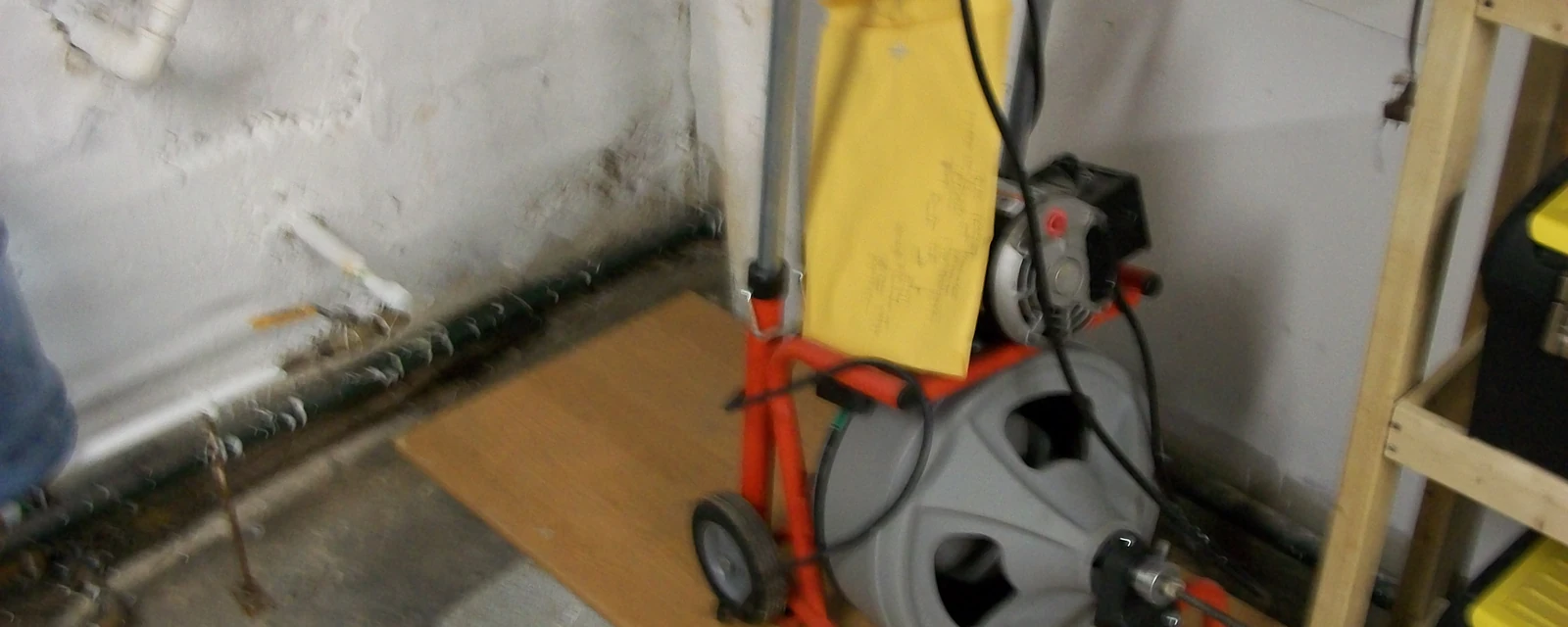
A drain cable is a coiled steel line with a head on the end. The machine spins it as it feeds into the pipe. The head bores through soft blockages and catches hair and rags so they can be pulled back out.
Cable size matters. A narrow cable of about a quarter inch suits bathroom sinks and tubs. Heavier cable, often three quarters of an inch or more, is used on 3 and 4 inch lines. Using a thin cable on a large line tends to punch a hole through the clog and leave the walls coated.
A cable cannot scour grease from pipe walls, and it can leave a ragged opening in a heavily scaled line. If the same drain clogs again within weeks, the next step is a camera look, or hydro jetting to wash the pipe wall clean.
Water standing in the drain right now?
Call (407) 964-8940 and tell the dispatcher which fixtures are backing up.
Kitchen sink clogs: grease, food and the dishwasher connection
Kitchen drains clog differently from bathroom drains. Cooking fat runs through as a warm liquid, then cools on the pipe wall and builds a waxy layer. Rice, pasta and coffee grounds stick to it and form a plug.
If the sink is a double bowl, check whether both sides are backed up. When the dishwasher drains into the same line, dirty water may also appear in the dishwasher tub. That points to a clog past the point where the dishwasher hose connects. A broken garbage disposal can add to the problem, since a jammed unit holds water in its chamber.
We clear the line from the trap arm or the nearest cleanout, then flush with hot water. Pouring grease down the sink after the repair undoes the work in a few weeks. Wipe pans with a paper towel and throw the towel away.
Which method fits which clog
Different blockages respond to different tools. This is how we usually match the method to what the symptoms suggest.
| Symptom | Likely cause | Method |
|---|---|---|
| One sink drains slowly | Hair, soap film or grease in the trap or branch | Hand cable or trap cleaning |
| Kitchen sink and dishwasher both back up | Grease and food solids past the dishwasher tie-in | Machine cable, then hot flush |
| Tub and toilet gurgle together | Blockage in the main branch or main drain | Larger cable from a cleanout |
| Same drain clogs every few weeks | Buildup on the pipe wall or a damaged section | Camera look, then hydro jetting or repair |
| Floor drain bubbles when the washer runs | Lint and sludge in the lower line | Machine cable and water test |
A camera look adds a step but shows whether the pipe itself is the problem.
A leaking drain line is not the same as a clogged one
A drain line can leak at a joint, a cracked fitting or a corroded section. The signs are a damp cabinet floor under the sink, a stain on a ceiling below a bathroom, or a musty smell with no visible water.
Cleaning a leaking line does not fix the leak. Sometimes it makes the leak worse, because clearing a long-standing blockage lets water flow at full volume through a weak joint. If we see water escaping while we run the line, we stop and explain the options.
Small leaks at a slip joint can be tightened or replaced. A cracked section is cut out and replaced. A leak inside a wall or slab is found with leak detection before anyone opens the finish.
Winter Springs sewer mains and why one house can be the problem
The city's utility division lists 112 miles of gravity sewer mains and 43 lift stations. A house drain connects to that system by a lateral, and the answer to where city responsibility ends is something to ask the city Utility Division.
A useful test is simple. If one fixture is slow, the clog is probably in your house. If every drain in the house is slow or the lowest fixture backs up, call us, and also check with neighbors. A shared problem suggests the city side. Our crews also cover Casselberry and other nearby towns, where the same test applies.
Tuscawilla is an established neighborhood, with its country club opening in 1971, and Trotwood Park sits at 701 Northern Way nearby. Ask what year your home was built. Older homes may have more buildup in the lines, which is a reason to look with a camera after a repeat clog.
What changes the price of a drain cleaning
We give a clear price before work starts. These are the things that move it, since a drain clog can be a ten minute job or a half day.
Where the clog sits
A blockage in an exposed trap is quick. One in a branch line behind a finished wall needs a cleanout or a longer cable run.
Line size and cable type
A 1.5 inch sink line uses a small cable. A 4 inch main drain needs a heavier machine and more time.
Access to the line
A cleanout makes the job easier. When none exists, we may need to pull a fixture or install a cleanout fitting.
Repeat blockages
A drain that clogs again and again may need a camera inspection, which is priced separately from the cabling.
Time of day
Ask whether the hour of the call affects the price. You hear the price before work starts.
If a clog overflows and soaks flooring, insurance typically covers that sudden accidental damage. It does not cover wear in the pipe or the cost of clearing the clog. Ask your insurer how your policy treats backup damage.
If the quoted job sounds bigger than a simple clog, say so on the call. We would rather talk it through before a cable goes into the line.
Habits that keep drains open
None of these replace a plumber, but they cut down on repeat visits.
- Pour cooled cooking grease into a can and throw it away.
- Use a hair catcher in every shower and tub drain.
- Run hot water for 30 seconds after washing dishes.
- Keep wipes, even ones labelled flushable, out of the toilet.
- Run a flush of hot water through little-used drains once a month.
- Do not pour chemical cleaner into a drain that is already standing full.
Drain Cleaning questions answered
Yes. Dispatch runs 24/7, including nights and weekends. Tell the dispatcher which fixtures are involved and whether water is reaching the floor, and we send a licensed plumber with a cable machine suited to the line size.
Ask whether the hour of the call affects the price. You hear the price before work starts.
A cup plunger with a good seal helps on a sink or tub, with the overflow opening blocked by a wet cloth. Plunge with firm, steady strokes for about 20 seconds.
Stop if the water does not move or if sewage smell appears. Forcing a cable into a line you cannot see can push a clog deeper.
Tubs clog with hair and soap residue that collects just below the strainer or in the trap. The sink is usually a separate branch, so it can drain normally while the tub does not.
If the tub, shower and bathroom sink all run slowly together, the blockage is further down the shared branch.
Usually yes. Corroded screws and sealed grates are common on older floor drains and tub strainers. We remove them without damaging the fixture where we can, and tell you if a part needs replacing.
We clear many outdoor drains with a cable or by flushing the line, and we also work in nearby towns such as Oviedo. Leaves and soil are the usual cause. If the outdoor drain connects to the city storm system, a blockage downstream may not be on your property, and we explain what we find.
It often is. The dishwasher hose ties into the sink drain or disposal, so a clog past that point sends dirty water back into the machine. An air gap or a high loop in the hose prevents backflow, and we check both when we clear the line.
Yes. Tell us it is a rental when you call. We note the unit, the fixtures involved and what we found, so the work order and the tenant's account match. Repeat clogs in a rental are a good reason to ask for a camera look.
Not because of the park. Clogs depend on age and use of the line. Established neighborhoods like Tuscawilla can have decades of buildup, so after a repeat clog we suggest a camera look. Ask what year your home was built, since that tells you how old the lines are.
Need a drain cleared today?
Call (407) 964-8940 and a licensed plumber will tell you what the clog likely is before work starts.