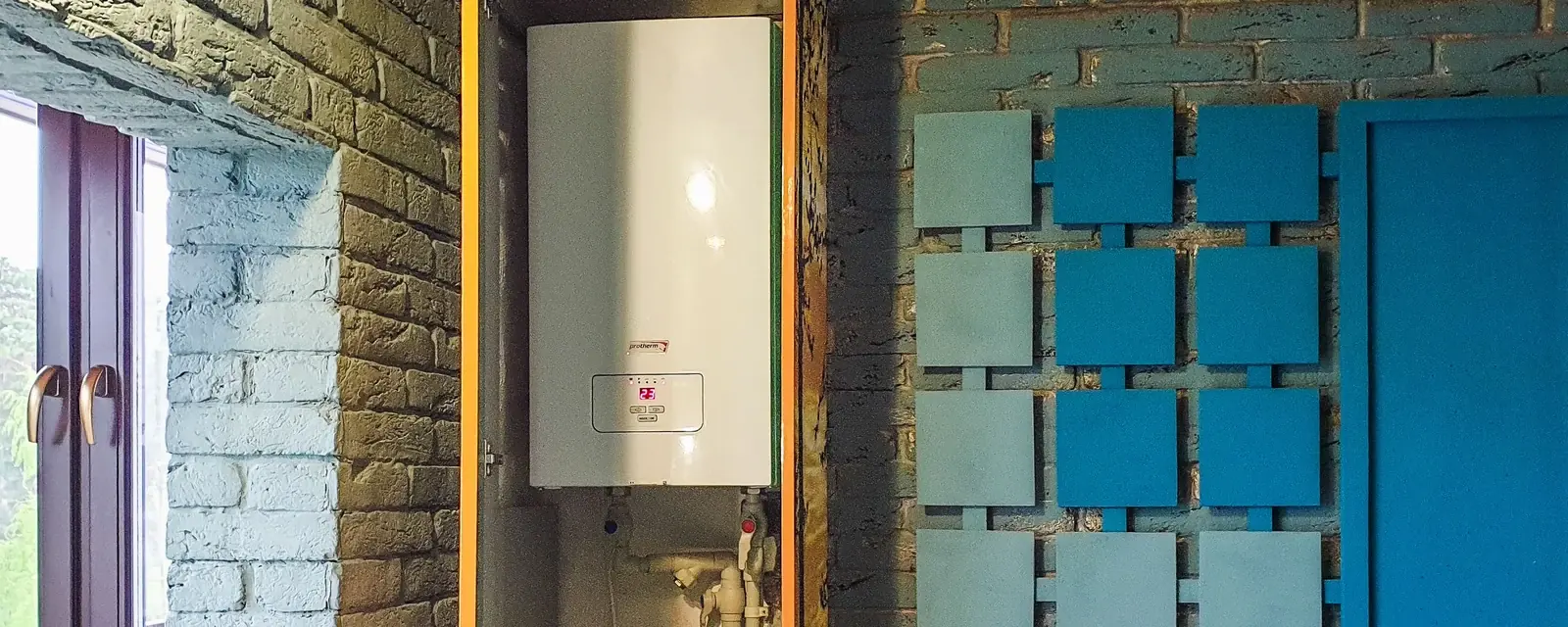
To flush a tankless water heater, shut off power and gas, close the isolation valves, and connect a small pump and hoses to the service ports. Circulate white vinegar or a maker-approved descaler through the heat exchanger, then rinse with clean water. In hard water like Winter Springs, many owners flush about once a year, but your manual and your symptoms set the real schedule.
Scale is the quiet enemy of a tankless heater. Calcium and magnesium in hard water bake onto the inside of the heat exchanger, where the passages are narrow and the metal runs hot.
This guide covers why flushing works, a safe step order, how often to do it, and the point where you should stop and call. If you want help, our tankless water heater page lists the service we offer, and a softener or filter can slow the buildup.
Why scale hurts a tankless unit
As water heats, dissolved minerals fall out and stick to hot metal. In a tank they mostly settle on the bottom. In a tankless unit they coat the inside of thin heat exchanger tubes.
A scale layer insulates the metal, so the burner works harder to heat the same water. It also narrows the passage, which cuts flow and can trigger error codes. Over time the unit may overheat and wear out early.
Winter Springs hardness and your flush schedule
The city utility page reports that Winter Springs water averages 150 mg/L hardness, which the city lists as 8 grains. On the USGS hardness scale, 121 to 180 mg/L counts as hard.
That is enough to leave scale on a heat exchanger. Many makers call for regular descaling in hard water, so check your manual, and consider a yearly flush as a starting point if the manual is silent. A water softener or filter reduces the load, though it does not remove the need to check the unit.
Source type: city utility page
What 150 mg/L means for the machine
The city lists its average as 8 grains. Band names follow the USGS hardness scale and are shown as a general reference.
Hardness is a running average, and the tap water you get can vary with the source. Plan the schedule on your unit's behavior, not just on one number. If the heater sounds loud, flow drops, or codes appear, flush sooner.
Slow the scale
A softener or filter can lower the minerals reaching your heater. Call (407) 964-8940 any hour. The line is open 24/7.
What you need before you start
Gather everything first so the unit is not left open mid-job.
- A small submersible or circulation pump rated for the job
- Two hoses with fittings that match the service valves
- A clean bucket of at least a few gallons
- White vinegar or the descaler the maker approves
- Rubber gloves and eye protection
- The unit's manual for service valve positions
- A towel and a flashlight
The flush, step by step
Follow your manual if it differs. Models vary.
Turn off power and gas
Switch off the unit's power and close the gas shutoff. Let hot water drain off in case the heat exchanger is still hot.
Close the isolation valves
Shut the hot and cold service valves so the unit is cut off from the house plumbing. Open the drain ports carefully, since hot water may come out.
Connect the pump and hoses
Attach one hose from the pump to the cold side port and another from the hot side port back into the bucket. Pour in the vinegar or approved descaler.
Circulate the solution
Run the pump for the time the manual recommends so the liquid works on the scale. The solution may turn cloudy as the scale loosens.
Rinse and clean the screen
Drain the solution, flush the unit with clean water, and clean the inlet filter screen. Rinse until the vinegar smell is gone.
Restore service
Reopen the valves, bleed air from a hot tap, check for drips, then restore gas and power. Run hot water and confirm normal operation.
Symptoms and what they may mean
Use this to decide whether a flush is the right next step.
| Symptom | Possible cause | What to do |
|---|---|---|
| Hot water takes longer or flow is weak | Scale narrowing the heat exchanger or a clogged inlet screen | Clean the screen, then flush |
| Error code on the display | Scale, low flow, or a venting or gas issue | Look up the code, flush if scale is likely, call if it returns |
| Popping or rumbling sound while heating | Scale causing steam bubbles | Flush and check again |
| Lukewarm water at all flows | Undersized unit, failed sensor, or scale | Call a plumber for testing |
| Smell of gas | Gas leak | Leave the building and call 911 or your gas utility from outside |
The inlet screen deserves its own look
Most tankless units have a small mesh screen on the cold water inlet that catches grit and flakes of scale. When it clogs, flow drops and the unit may not fire, which looks like a bigger problem than it is.
Shut the cold valve, release pressure, and pull the screen as the manual shows. Rinse it under a tap and brush off the debris. If the mesh is torn or bent, replace it rather than reusing it.
What a flush cannot fix
Flushing removes mineral scale. It does not repair a failed flow sensor, a cracked heat exchanger, a bad igniter, or a blocked vent. If the unit still shows a fault after a clean flush, the cause is something else.
Also note that heavy scale may not dissolve fully in one pass. A unit that has gone many seasons without service can need a longer circulation or a second round. If flow stays poor, a plumber can test the pressure drop across the unit and tell you whether the heat exchanger is worth saving.
After the flush: a quick check
Run hot water at one tap for a minute and confirm the temperature holds steady. Then open a second tap and check that the unit keeps up. Look under the unit for drips at each service valve and hose connection.
Write the date on the unit or in a home log, along with the product you used. That record shows the next owner or technician what was done. Watch the unit for a few days, since small leaks at valves sometimes show only under pressure.
When to stop and call a plumber
Stop if the unit has no service valves, if any fitting leaks, or if you smell gas. Call as well if the unit shows the same error after flushing, or if the vent looks damaged.
If your tankless heater was installed without isolation valves, a plumber can add them. That is a small job that makes every future flush easier.
How often should you flush
There is no single schedule. Makers publish their own, and hard water shortens it. A household with heavy use may need flushing sooner than one with light use.
Treat these as triggers to flush early: dropping flow, noise, longer waits, and error codes. If you have a softener, you may stretch the interval, but keep checking the inlet screen. Note the date in a log so the next person knows.
Vinegar safety and handling
Vinegar is mild, but fumes in a closed closet can sting eyes and nose. Open a door or window. Never mix vinegar with bleach or other cleaners, since that can release toxic gas.
Wear gloves and eye protection, and dispose of the used liquid down a drain as the maker directs. Do not drink or cook with the first water that runs after a flush. Let hot water run for a while first.
Renting or managing a unit
Landlords should keep a flush log for each unit, since scale is one cause of no-hot-water calls. A yearly visit is easier than an emergency in cold weather.
Tenants should not flush a landlord's unit without approval, and should report error codes right away. We serve homes in Sanford and Casselberry as well as Winter Springs.
Questions readers ask
Many makers allow white vinegar, and some prefer their own descaler. Check the manual, since the wrong product can harm seals or void a warranty. Never mix it with other cleaners.
Flow at the tap should feel stronger, the unit should run quieter, and error codes tied to low flow should stop. If none of that changes, scale was probably not the main problem, and a plumber should test the unit.
Often yes. If the unit has never been flushed, scale may be thick and need a longer or repeated cycle. If flow does not recover, call a plumber.
No. Flushing clears scale, but sensors, igniters, vents, and gas supply can fail too. If the same problem returns, have a plumber test the unit.
The city reports an average of 150 mg/L, or 8 grains, which counts as hard. A softener is optional, but it cuts scale. Ask for a water test and a plain explanation before you buy.
Yes. We dispatch from Winter Springs 24/7, and same-day appointments are offered when available. You get a clear price before work starts.