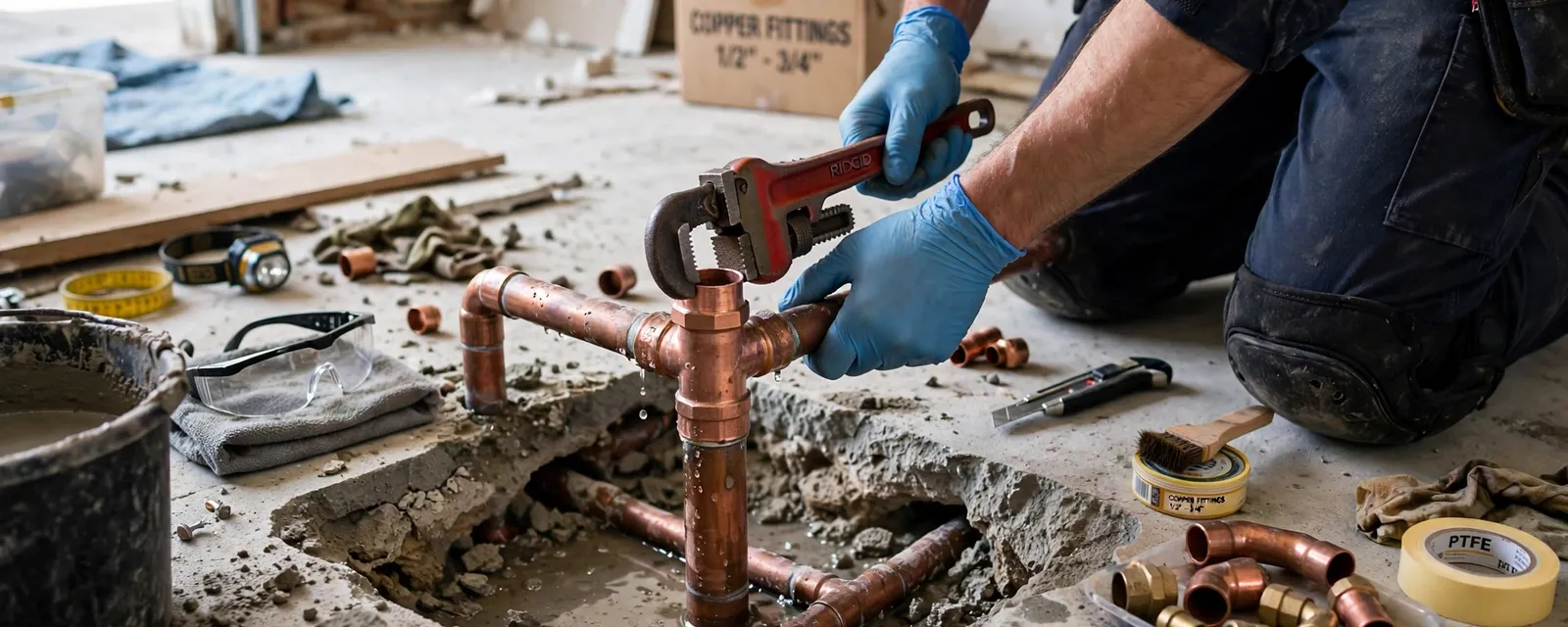
Choose a spot repair when one leak is confirmed, the rest of the pipe is in good shape, and the break is easy to reach. Choose a reroute when the buried line is hard to reach or keeps failing, so a new line can run through the attic or walls instead. Choose a repipe when leaks show up in more than one place or the pipe material itself is wearing out.
A slab leak forces a decision that feels bigger than it is. The plumber has found the break, and now there are three ways forward with very different amounts of mess, time and long-term value.
The right answer comes from facts, not from the loudest sales pitch. Below is a framework you can use to check any recommendation, including ours.
The three options side by side
Every house is different, but the pattern below holds for most slab leaks.
| Factor | Spot repair | Reroute | Repipe |
|---|---|---|---|
| Best when | One leak, sound pipe elsewhere | Buried section is hard to reach or keeps leaking | Several leaks or aging pipe material |
| What changes | A small section of slab is opened | New line runs overhead, old line is capped | Most supply pipes are replaced |
| Disruption | Contained to one area | Some wall or ceiling access needed | Widest, but done in a planned sequence |
| Risk afterward | Another leak may appear on old pipe | Old buried pipe is abandoned in place | Lowest chance of repeat leaks |
| Leak locating needed | Yes, must be exact | Helpful, to confirm the line | Helpful, to confirm the scope |
A plumber should explain which row matches your home before quoting.
When a spot repair makes sense
A spot repair is the least invasive option. After a locator narrows the leak to a small area, the crew cuts a section of concrete, exposes the pipe, and replaces the damaged piece. The slab is patched and the floor finish is restored. Patching is priced as its own scope, so ask for it listed separately in writing.
This works well when the leak is clearly isolated. A single pinhole in an otherwise clean pipe is the textbook case. Pressure testing and a look at exposed pipe should show no thinning, pitting or green corrosion on the metal.
The catch is that a repaired pipe sits next to old pipe. If that old pipe is of the same age and type, the next weak spot may be only a few feet away. A good plumber tells you this before you commit.
Rerouting around the slab
A reroute leaves the buried pipe alone. The plumber caps the failed section and runs a new supply line through the attic or inside the walls to the fixtures it served. Nothing in the concrete has to be broken.
This is often the cleaner answer when the leak sits under cabinets, tile or a hard-to-reach corner. It also helps when the same line has leaked before. Moving the pipe out of the concrete means any future problem is visible and reachable.
A reroute does mean cutting some drywall to pass the new line. The wall repairs and paint are part of the job scope, and you should see them listed in the price. The old buried pipe stays in the ground, capped and unused.
Not sure which fix fits?
A locate and a pipe check give you facts before you choose. Call (407) 964-8940 any hour. The line is open 24/7.
When the whole system is the problem
A repiping job replaces most or all of the supply pipes in the house. It is the right call when leaks appear in different rooms, when the pipe has widespread corrosion, or when a spot repair has already been done twice.
Modern PEX is common for this work because it bends around corners with fewer fittings and handles minor temperature swings well. Copper remains a good choice for homeowners who prefer metal. A plumber should explain both options and why one fits your layout better.
Repiping costs more up front than a single repair. It also removes the repeating cycle of locate, open, patch and wait for the next leak. For a home with a failing pipe type, that trade usually pays off.
Why the pipe material changes the answer
Copper that has pitted from the inside, galvanized steel that has narrowed with rust, and older plastic that has turned brittle all fail in different ways. The material tells you how much life the untouched pipe has left.
Ask the plumber what the pipe is and how it looks where it was exposed. If the answer is vague, ask for a photo. A cut section of pipe is easy to inspect, and the inside wall tells the story. Heavy scale, thin walls or green crust suggest the pipe is near the end.
Pressure testing adds more evidence. The plumber isolates a zone, pressurizes it, and watches the gauge. A zone that holds steady is healthy. A zone that drops points to another leak you have not found yet, and that finding can move you from a spot repair to a bigger plan.
What a day on site usually looks like
The crew starts by shutting off the water and protecting the floors. Dust control matters when concrete is cut, so they seal doorways and use a vacuum on the saw.
After the repair, the new section is pressure tested before anything is closed. The test is a simple check that proves the joint holds under normal house pressure. Only then does the crew patch concrete and restore the finish.
A reroute or repipe spreads across more days and rooms. You should get a plan that says when water will be off, which walls will open, and who handles the patching.
Questions that settle the choice
Ask these in order. The answers usually point to one path.
How many leaks were found?
One confirmed leak favors a spot repair or reroute. Two or more in separate zones push toward a repipe.
What shape is the nearby pipe?
Ask to see photos of the exposed pipe or camera views of the line. Clean metal is a good sign. Pitted or flaky metal is not.
Has this line leaked before?
A second leak on the same run is a pattern. A reroute or repipe usually beats a third patch.
What will the finished house look like?
Ask where walls, flooring or cabinets will be opened and who restores them. The answer belongs in writing with the price.
Winter Springs permit wording
The City of Winter Springs building permit application says a separate permit must be secured for electrical work, plumbing and signs. It also asks for the number of plumbing fixtures and for a contractor license number and qualifier.
A reroute or a repipe changes the plumbing system more than a spot patch, so it is wise to raise permits early. Permit rules vary, so ask the Winter Springs building department at 1126 East State Road 434 before work begins. Your plumber should also be able to say what paperwork applies to your scope.
Source type: city building permit application
Red flags against a quick spot fix
Be careful if the plumber has not located the leak with a tool and just guesses where to cut. Be careful if no one has looked at the surrounding pipe. And be careful if the recommendation changes with no new finding.
A reputable company puts the plan and the price in front of you first. If you feel rushed into opening the floor, pause and get a second opinion.
What moves the price of each option
We do not quote numbers in an article, because they depend on your house. These are the factors that decide the figure you will be given.
Access to the leak
A break under open floor is simpler than one under built-in cabinets or a tile shower.
Pipe length and layout
A reroute or repipe price tracks how many feet of pipe and how many fixtures are involved.
Floor and wall restoration
Patching concrete, then matching tile, wood or drywall, is part of the work, not an extra.
Permit steps
Larger scopes may need permits, and the paperwork is part of the schedule.
Leak locating time
A clean pressure test and a precise locate make every option cheaper than guesswork.
Home insurance typically covers sudden accidental damage, such as water that ruins flooring, but not wear or the repair of the failed pipe itself. Ask your insurer what your policy covers before the work starts.
You get a clear price before work starts, written for the option you choose. Our slab leak repair page explains how the process runs from locate to restore.
Where we work and what to expect
Homeowners in Longwood and Lake Mary call us from nearby, and the same licensed plumbers handle slab leaks across Seminole County. The line is open 24/7 and a licensed plumber is dispatched, and same-day appointments are offered when available.
If water is actively coming up through the floor, close the main valve first. Then call, and we will help you decide what comes next.
Questions readers ask
Yes, in many cases. A reroute runs a new line overhead and leaves the concrete alone. A spot repair does need to open a small area of slab.
Not always. If the surrounding pipe is clean and healthy, a spot repair can last for years. If the pipe is the same age and shows corrosion, more leaks are possible.
Ask the plumber to show you the evidence. That might be several located leaks, photos of corroded pipe, or a pressure test that fails in more than one zone.
The supply is shut during the cut-in and the pressure test. For larger jobs, crews plan the sequence so water returns at the end of each working day when possible.
The Florida Department of Business and Professional Regulation runs a Verify a Licensee search at myfloridalicense.com. You can search by name, license number, city or county. The same site has a search for unlicensed activity, which is worth a look before you sign for a big job.