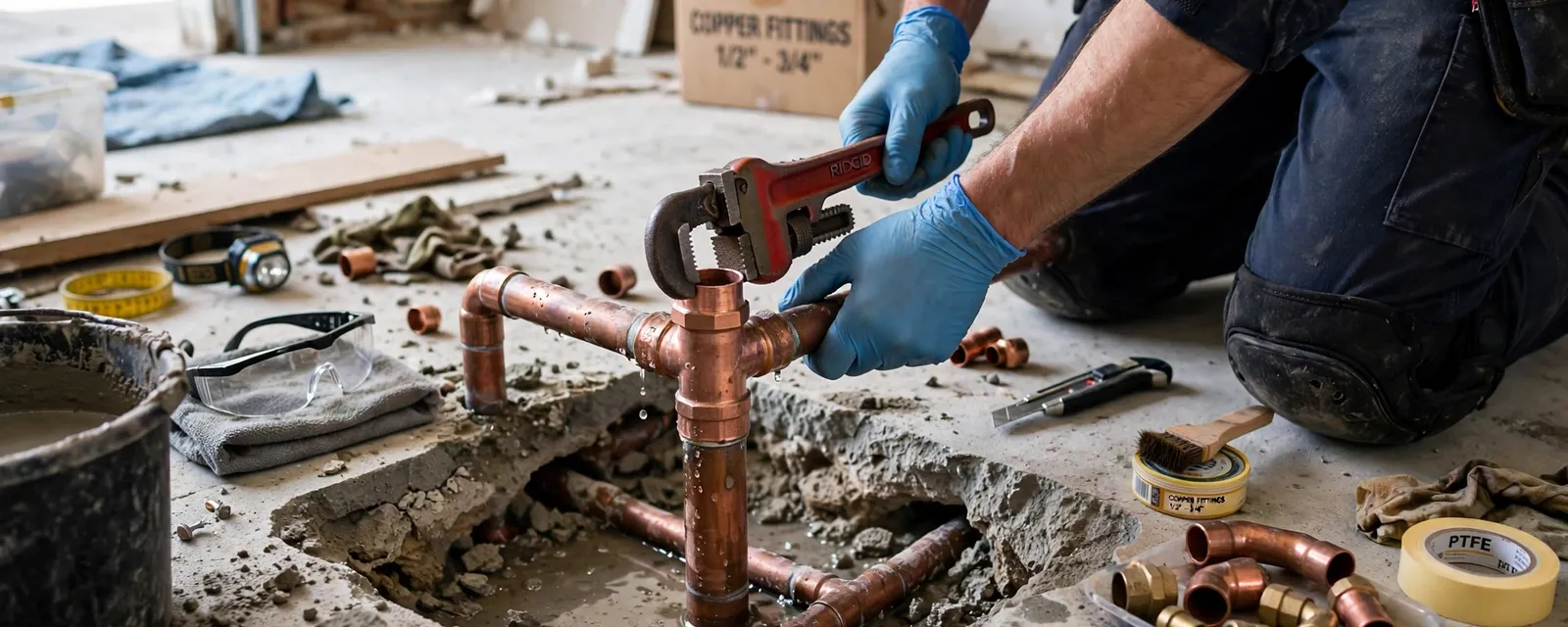
A plumbing leak in a slab usually shows up as a warm spot on the floor, running water sounds when every fixture is off, damp flooring with no visible source, or a water meter that keeps moving. The quickest check is a meter test. Shut off all water use, read the meter, wait 30 minutes, longer for a slow leak, and read it again. If the numbers changed, water is escaping somewhere.
A leak locator then tells a slab leak apart from a bad toilet valve, an irrigation line or a water heater.
In a slab-on-grade home, the supply pipes often run through or beneath the concrete. When one of those pipes pinholes, the water has nowhere obvious to go. It soaks the soil, lifts flooring from below, and runs up your bill long before you see a stain.
This guide walks through the clues, a simple test you can do yourself, and what a professional locator does that you cannot. It also covers the point where checking should stop and a call should start.
Five clues that point to the floor
One clue alone proves little. Two or three together make a slab leak likely.
A warm patch underfoot
A leaking hot line heats the concrete above it. Bare feet on tile will find the spot faster than any gadget.
Running water with everything off
Stand in a quiet house at night. A faint hiss or trickle from the floor or wall means pressurized water is moving through a pipe nobody is using.
Damp carpet or lifting planks
Moisture rising through the slab swells wood flooring and soaks carpet pad. Baseboards may stain from the bottom edge up.
Low pressure at several taps
A large leak steals pressure from the whole house. If every faucet runs weaker than it used to, something is draining the line.
A water bill that climbs without a reason
Habits did not change, but the usage did. A steady leak adds volume every hour, day and night.
Run the meter test before you call
This test costs nothing and takes under an hour. It tells you whether water is leaking at all, which is the first question any plumber will ask.
Stop all water use
Turn off the dishwasher, washer and ice maker. Make sure no one flushes a toilet or runs a tap.
Read the meter
Lift the meter box lid. Note the position of the low-flow indicator, the small triangle or dial that spins at the slightest flow.
Wait 30 minutes
Wait longer for a slow leak. Stay out of the water. Do not open any faucet while you wait.
Check it again
If the indicator moved or the digits advanced, water is leaking somewhere on the property. If it sat still, the leak may be intermittent or the problem lies elsewhere.
What each clue usually means
Use this as a starting map. It narrows where a plumber should look first.
| What you notice | Likely cause | Next move |
|---|---|---|
| Warm floor spot, hot water line | Pinhole in a hot supply pipe under the slab | Shut off the water heater, call for locating |
| Meter moves, no wet spots anywhere | Buried line or slab leak, or a running toilet | Check toilets, then call for locating |
| Damp wall base near the water heater | Tank or fitting leak, or a slab leak at the edge | Look at the tank and the connections, then call |
| Wet yard patch near the meter | Service line or irrigation leak | Shut the main valve and call |
| Hissing sound, pressure drop | Active supply leak | Shut off the main and call right away |
A table cannot diagnose your house. It only suggests where to start.
Suspect water under the floor?
Leak detection pinpoints the break so repairs stay small. Call (407) 964-8940 any hour. The line is open 24/7.
Winter Springs homes and slab-edge hot lines
Wikipedia's city history notes that homes from the 1970s onward are common in Winter Springs, with the Tuscawilla development growing up around the country club that opened in 1971. That means pipe age and pipe material differ from one subdivision to the next.
The practical step is simple. Pipe age differs by subdivision, so ask what year your home was built before you decide anything about the plumbing. Then tell the plumber, because the age helps narrow what to test first.
Source type: Wikipedia, city history
What a locator does that your ears cannot
A professional doing leak detection starts by isolating the system. Closing valves in sections shows whether the hot side, the cold side or the main line is losing water. A pressure gauge holds the line steady, and a drop on the gauge confirms the leak is real.
Next comes acoustic listening. A sensitive microphone on the floor picks up the sound water makes as it escapes a pipe under pressure. The loudest point on the floor is rarely the exact break, so the technician crosses the area in a grid and compares readings.
Thermal imaging helps when the leak is on a hot line. A warm stripe on the camera follows the pipe route and points toward the break. Some companies use tracer gas. Ask what method will be used.
A locator is honest about limits. No tool sees through concrete. The goal is to narrow the break to a small area so the fix does not mean tearing up half the house.
Leaks that pretend to be slab leaks
Plenty of water problems look like a slab leak and are not. A toilet with a worn flapper can leak into the bowl all day and move the meter without a drop on the floor. Check by dropping food coloring in the tank and waiting 15 minutes. Color in the bowl means the flapper is bad.
A lawn sprinkler line with a cracked fitting also moves the meter. Shut off the irrigation valve and run the meter test again. If the meter stops, the problem sits outside the house.
A water heater that weeps at its fittings, or a leaking tank bottom, can wet the slab edge near the garage or utility closet. Dry the base with a towel and check again in an hour. Fresh moisture points to the heater, and a water heater leak calls for a different repair than a pipe under the floor.
When to stop checking and call
Call as soon as the meter test shows movement and you cannot find the cause in a toilet or sprinkler line. Call right away if floors are wet, if water is pooling, or if a hot spot is too warm to stand on.
Do not drill, cut or chip the slab to chase the leak. You can hit another pipe or an electrical conduit, and the break is rarely where you guess. Keep the main valve closed until a plumber arrives if water is actively coming up.
Protect the house while you wait
If the leak is active, close the main shutoff valve at the house. Then open the lowest faucet to relieve pressure and drain the lines. This slows the water under the floor and keeps the slab from staying saturated.
Turn off the water heater at its breaker or gas control if the hot side is the suspect. A heater that keeps firing while the lines are drained can damage the element or the tank.
Move rugs, boxes and furniture off wet flooring and run a fan across the area. Take dated photos of the damage and the meter reading. Those records help the repair plan and any claim conversation with your insurer.
Keep children and pets off any floor spot that feels hot. A leaking hot line can heat concrete enough to cause a burn.
What happens after the break is located
Once the spot is known, there are usually three paths. A spot repair opens the slab over the break and replaces the damaged section. A reroute abandons the buried pipe and runs a new line through the attic or walls. A full repipe replaces the supply system when several areas are failing.
Each path has trade-offs in disruption, time and long-term value. The right choice depends on what the locator finds and how the rest of the pipe looks. Our page on slab leak repair explains how those options compare, and a clear price comes before any work begins.
If your home is near Oviedo, our plumbers serving Oviedo can reach you from our Winter Springs base. The same goes for homes in Casselberry.
Questions readers ask
No. A pipe does not seal itself, and the hole only grows as water erodes the metal. Even a small leak can saturate the soil and cause flooring damage or shifting over time.
Not always. Radiant sun through large windows, a heat source near the floor, or a water heater sitting on the slab can warm the surface. A warm patch that stays in one spot and feels warmer after you run hot water is more suspicious.
It depends on access and how many lines are involved. A single suspected area is quicker than a whole house, and the technician explains the plan and the price before opening any floor.
Policies differ. Many cover sudden accidental damage to the home, but not wear or the repair of the failed pipe itself. Ask your insurer what applies to your policy and keep photos of any damage.
Start with your own main valve, which stops water to the house. If you cannot close it, the City of Winter Springs lists a 24-hour utility emergency number of (407) 327-2669. Use it for the city side of the meter, and call us for the plumbing inside and under your home.