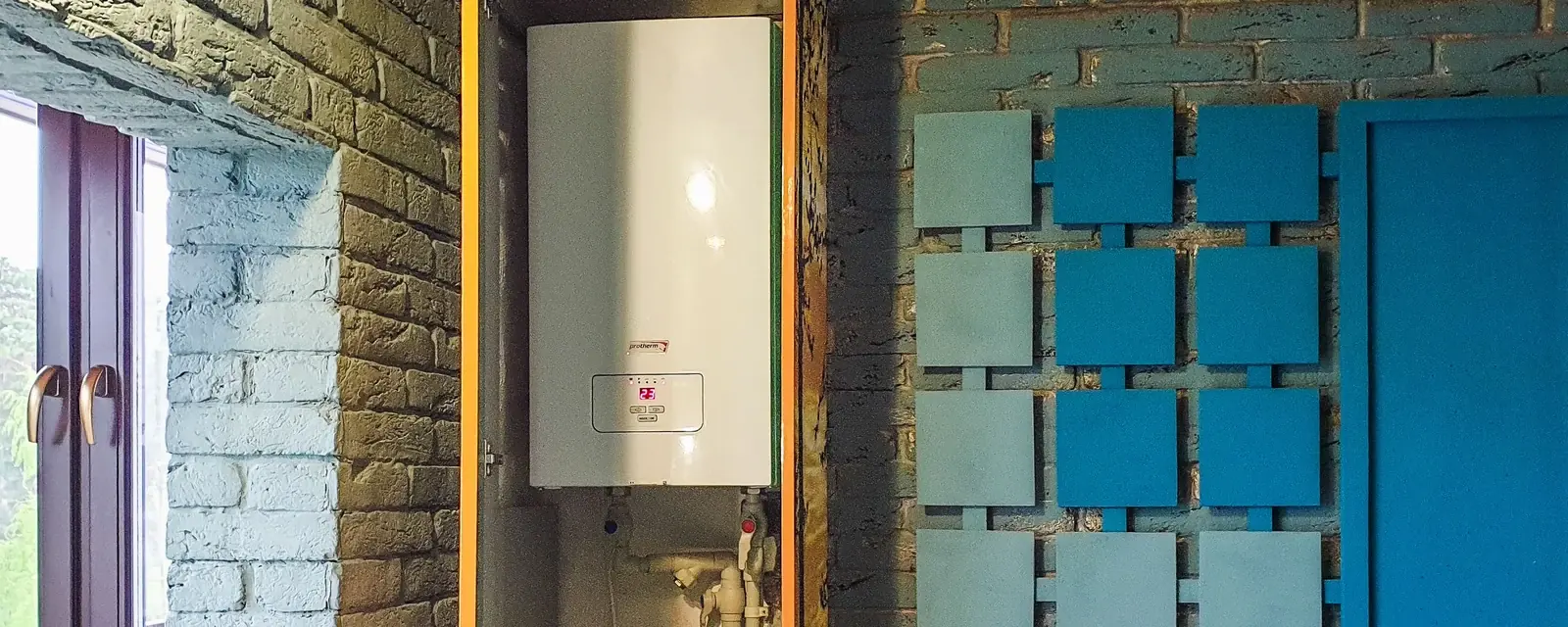
A non-condensing tankless water heater is a gas on-demand unit with one heat exchanger. Its exhaust leaves hot, so it needs heat-resistant vent material, and it normally has no acidic condensate to drain. A condensing unit adds a second heat exchanger that pulls more heat from the exhaust, which cools it, and that cooler exhaust makes condensate that must drain away.
The word condensing sounds like a technical footnote, but it decides your vent material, your drain needs, and part of your install scope. Two units that look alike on a wall can need very different work behind them.
Below is how each type works, how they compare, and what to ask before you sign. For equipment options, see our tankless water heater page, and for the installation side, the water heater installation page covers the planning.
Non-condensing versus condensing at a glance
Both heat water the same way at the burner. The difference is what happens to the exhaust.
| Feature | Non-condensing | Condensing |
|---|---|---|
| Heat exchangers | One | Two, the second captures exhaust heat |
| Exhaust temperature | Hot | Much cooler |
| Vent material | Heat-resistant, such as stainless steel, as the maker specifies | Often plastic types the maker approves |
| Condensate | Little to none in normal use | Acidic liquid that needs a drain, often with a neutralizer |
| Efficiency | Lower | Higher |
| Typical upfront cost | Often lower for the unit | Often higher for the unit, with extra drain work |
Always follow the installation manual for the exact model. Vent rules are set by the maker.
How the non-condensing design works
When you open a hot tap, flow sensors tell the burner to fire. The burner heats a single metal heat exchanger, and water passing through picks up the heat on the spot. Combustion gases then rise out the vent.
Because those gases leave while still hot, they stay as vapor and do not condense inside the vent. That is why the vent has to survive high temperatures, and why an ordinary plastic pipe is not acceptable for this design.
Why venting is the heart of the project
Venting is where tankless installs most often go wrong. The vent must be the right material, the right diameter, within the allowed length, and sealed at every joint. A leaking vent can push carbon monoxide into the home.
The maker's manual lists the allowed vent lengths and fittings for each model. Every elbow adds resistance, so a long, bendy route can force you to a different unit or a different location. Do not substitute parts. Mixing vent products from different makers is a common mistake.
Planning a tankless install
Gas, vent, and drain work all shape the install. Call (407) 964-8940 any hour. The line is open 24/7.
Which type fits which home
Neither design is better in every house.
Replacing an older vent run
A home with an existing metal flue may suit a non-condensing unit, if the flue is sound and approved for the new model.
No convenient drain nearby
Condensing units need a condensate path. A non-condensing unit avoids that if the drain is far from the mounting spot.
High use and long ownership
Condensing units use fuel more efficiently, so they suit homes with heavy hot water use and plans to stay put.
Tight budget on the unit
A non-condensing model is often less expensive to buy, though venting can erase the gap.
Winter Springs permits and your tankless project
The city building permit application lists the building department at 1126 East State Road 434 and says a separate permit must be secured for electrical work, plumbing, and signs. A tankless swap touches plumbing, gas, and possibly electrical.
The city form does not say whether water heaters are exempt, and we will not guess. Permit rules vary, so ask the Winter Springs building department before work starts, and make sure whoever does the job explains who pulls the permit.
Source type: city building permit application
What condensate is and why it matters
When exhaust cools below a certain point, water vapor in it turns to liquid. In a condensing unit that happens on purpose inside the second heat exchanger, and the liquid is mildly acidic.
That liquid must leave through a drain line, usually to a floor drain, a laundry standpipe, or a condensate pump. Many installs add a neutralizer cartridge so the acid does not attack drain pipe. A blocked condensate line can shut a condensing unit down, so keep the route clear and visible.
Replacing a tank with tankless: what changes at the vent
A tank heater often shares a vent with a furnace or sits under a draft hood. A tankless unit usually has its own sealed route, and may pull combustion air from inside or from outside depending on the model.
That means a hole through a wall or roof, a new termination point that must stay clear of windows and air intakes, and clearances from combustibles. These are manual requirements, not preferences. A plumber who has installed the model can tell you quickly if your wall or attic allows it.
Questions to ask the installer
Good answers here predict a clean install.
- Is this unit condensing or non-condensing
- What vent material does the manual require
- How long is the vent run and how many elbows
- Where will condensate drain, if the unit makes it
- Is the gas line sized for the unit's rated input
- Who handles the permit questions with the city
- What flush schedule do you recommend for hard water
Reading your own situation
If you already own a tankless unit, the model plate on its side shows whether it is condensing, and the vent pipe is a clue. Metal vent usually points to a non-condensing unit, while white plastic vent often points to a condensing one. The manual is the final word.
If a unit was installed by someone else and the vent looks improvised, loose, or discolored, have a licensed plumber inspect it. Brown staining around a joint can mean exhaust is escaping. Treat that as a safety issue and do not wait for the next service.
Why efficiency is not the only factor
Condensing units win on paper because they capture more heat. But a unit that cannot be vented or drained correctly in your home is the wrong unit, however efficient. Match the design to the house first, then compare running costs on your actual usage.
A mid-range model that fits the vent route and gas line beats a premium one that forces a long, bent, or improvised vent.
What a careful install looks like
The sequence matters for safety.
Confirm the model and vent type
Match the unit to the vent material and route you can actually build in your home, using the maker's tables.
Check gas supply and shutoff
The pipe must supply the unit's rated input at full firing. The plumber installs a shutoff valve and a drip leg or union as the manual requires.
Run and seal the vent
Each joint is assembled per the manual, supported, and sloped as specified.
Connect water and set service valves
Isolation valves on the hot and cold lines let you flush the unit later without cutting pipe.
Test for leaks and combustion
The plumber checks all gas joints for leaks, runs the unit, and verifies it fires and vents properly.
If you smell gas
Leave the building right away and call 911 or your gas utility from outside. Do not flip switches or look for the source. Call a plumber only after the utility says it is safe.
Electric tankless is a different animal
Electric tankless units have no burner, no vent, and no condensate. They do draw heavy current, so the panel and wiring decide whether one fits. The terms condensing and non-condensing apply only to gas units.
If your home has no gas or no practical vent path, an electric model may be worth asking about, with an electrician checking the load.
Maintenance and what to expect
Both types need periodic flushing to clear scale, and a visual check of the vent and condensate line. In a condensing unit, the neutralizer cartridge must be checked and refilled per the manual.
If a unit shows an error code, do not keep resetting it. Repeated lockouts can mean a blocked vent, a gas supply problem, or scale. Turn the unit off and call a plumber. Property managers should log the install date and the vent type for future vendors.
Questions readers ask
No. Both are safe when installed to the manual with the correct vent. The difference is the material and the exhaust temperature, not the safety level.
Only if it is sound, sized properly, and approved by the new unit's maker. Old flues may be corroded or the wrong diameter. A plumber checks this on the walk-through.
Usually the unit does not make acidic condensate in normal use, but the relief valve and flush ports may still need a path. Check the manual for the exact model.
Each model has its own limit, listed in the installation manual, and elbows count against it. A plumber measures the actual route before choosing a unit, since a run that is too long can force a different location or model.
Contact the Winter Springs building department at 1126 East State Road 434. Permit rules vary, so ask them about plumbing, gas, and electrical for your project.
Yes. We dispatch 24/7 from Winter Springs to Longwood and Casselberry, and same-day appointments are offered when available.