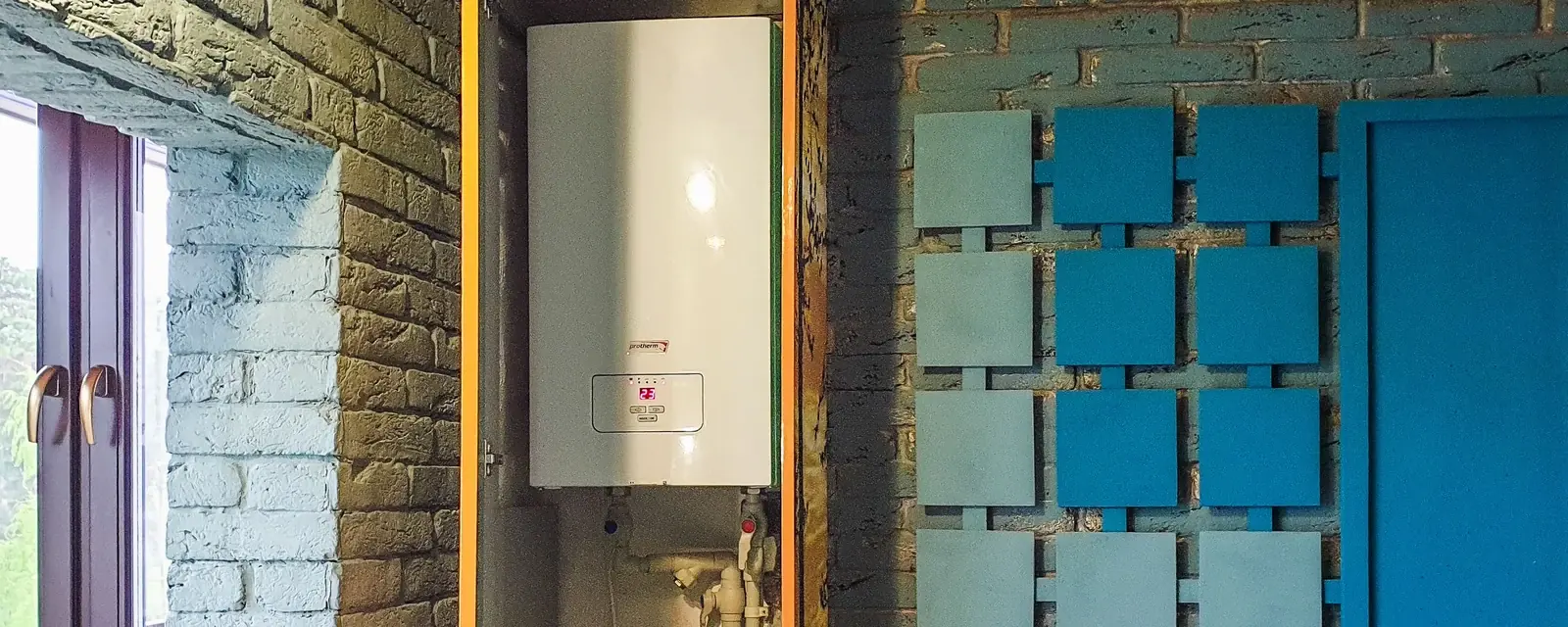
A tankless water heater is worth it if you want hot water that keeps coming, plan to stay in the home for years, and can support the gas, venting, or electrical load the unit needs. It is a weaker choice if you may sell soon or need major gas or electrical upgrades first. The decision table below sorts it out.
Tankless units heat water only when a tap opens, so there is no stored tank losing heat all day. That one mechanism drives most of the pros and cons.
The tricky part is that the unit itself is only half the project. Gas pipe size, a vent path, a condensate drain, and the water you feed it all change the real answer. If you are leaning toward one, our tankless water heater page covers the equipment, and the sections below help you decide if it fits your home.
Tank or tankless: a decision table
Find the row that sounds like your house.
| Your situation | Leans toward | Why |
|---|---|---|
| Family with back-to-back showers and a laundry day | Tankless, if sized well | A tank empties and recovers slowly. A tankless unit keeps heating as long as demand stays within its flow limit |
| Small home, one or two people, short showers | Either | Low demand means smaller gains from either type |
| Plan to move within a few years | Tank | The extra upfront work is unlikely to pay back before you sell |
| Gas line is small or far from the water heater spot | Tank, or budget for gas work | A tankless burner needs a lot of gas at once, so pipe size matters |
| No good place to vent through a wall or roof | Tank, or electric tankless | Gas tankless units need an approved vent path |
| Want to free closet or garage floor space | Tankless | Units mount on a wall and are much smaller than a tank |
Cost depends on the unit, the gas and vent work, and the permit. We give a clear price before work starts.
What endless hot water means in practice
The phrase is true with limits. A tankless heater cannot make unlimited hot water at any flow. It heats a certain number of gallons a minute, and if two showers and a dishwasher ask for more than that, the temperature drops.
That is why sizing starts with how many fixtures run at once, not with the number of people in the house. A professional adds up your peak demand and checks the incoming water temperature before suggesting a model.
Things that quietly change the answer
Most disappointment with tankless comes from one of these.
Gas supply
A gas tankless burner can demand far more fuel than a tank heater. An undersized line may need to be replaced or upsized before install.
Venting
The vent type depends on the unit. Non-condensing models need heat-resistant vent material, while condensing models also need a drain for acidic condensate.
Minimum flow
Units need a minimum flow to fire. A trickle at a faucet may leave you with lukewarm water.
Cold water sandwich
If you shut a tap and reopen it quickly, a slug of cold water can pass through before the burner relights. Many people find this minor, some find it irritating.
Electric service
Electric tankless models draw heavy current. Your panel may need work to carry the load.
Replacing a failed tank
If a tank has failed, a direct swap is often the fastest fix. Call (407) 964-8940 any hour. The line is open 24/7.
Winter Springs water and your heat exchanger
The city utility page reports that Winter Springs water averages 150 mg/L hardness, which the city lists as 8 grains. On the USGS scale, 121 to 180 mg/L counts as hard.
Hard water leaves scale on the narrow passages inside a tankless heat exchanger. Scale slows heat transfer, restricts flow, and can trip error codes. Plan on routine descaling, and ask about a softener or filter if you want to slow the buildup.
Source type: city utility page
Why hardness matters more for tankless
The city lists its average as 8 grains. Band names follow the USGS hardness scale and are shown as a general reference.
A tank heater has room for scale to settle at the bottom. A tankless unit squeezes all its water through thin channels, so a thin crust has a bigger effect on flow and heat.
When to keep a tank and when to switch
If your old tank is leaking, the decision is urgent, and the simplest route may be a tank swap. A tank replacement is usually quicker because the gas, vent, and water connections already match. See water heater replacement for how that job runs.
Switching to tankless makes more sense when you are already planning other work, such as a gas upgrade or a remodel. It also helps if you have the space problem or if hot water runs out in your home often. Think of tankless as a lifestyle fit, not a bill-cutting trick.
What about savings?
Tankless saves energy mainly by skipping standby loss, the heat a tank wastes while keeping water warm. How much you save depends on how much hot water you use and what you pay for fuel. Households that use little hot water gain less.
We do not promise a payback figure because it depends on your home and habits. Ask any installer to show their math with your actual fuel type, usage, and install scope.
How a tankless install actually goes
Knowing the scope helps you compare quotes fairly.
Walk the site
The plumber checks the gas line size and length, the vent route, the water and drain connections, and where the unit can mount on a wall.
Size the unit
Peak flow and the temperature rise from incoming water to your set temperature decide the model. Guessing here is how people end up with lukewarm showers.
Upgrade what the unit needs
This may mean a larger gas pipe, new vent material, a condensate drain, or a dedicated electric circuit. These items can add real cost, so ask for them itemized.
Set up, test, and teach
After connections, the plumber checks for gas leaks, tests combustion and venting, sets the temperature, and shows you the service valves used for flushing.
Waiting for hot water at a far fixture
A tankless heater does not fix a long pipe run. Water already sitting in the line between the heater and a distant bathroom is cold, and you still wait for hot water to arrive. Some homes add a recirculation loop or a small buffer tank to shorten that wait.
If your main complaint is a slow wait at one faucet, tell the installer. The cure may be pipe routing or a recirculation pump, not a new heater.
Safety notes for gas units
Gas tankless units burn fuel and push exhaust through a vent. A loose or damaged vent can send exhaust into living space, so use a carbon monoxide alarm near sleeping areas and replace it on the maker's schedule.
If you ever smell gas, leave the building and call 911 or your gas utility from outside. Do not call a plumber first. Gas work should be done by a licensed professional, and permit rules vary, so ask the Winter Springs building department.
Rentals and multi-unit properties
Landlords often like tankless for the small footprint and for lowering the chance of a flooding tank in a unit. Tenants can still lose hot water if a unit throws an error code from scale, so a service plan matters.
Property managers should record the install date and flush dates so the next tenant and the next vendor have the history.
The upkeep you sign up for
A tankless heater needs attention that a tank often gets away without. Flushing the heat exchanger with a descaling solution, cleaning the inlet screen, and checking the vent are the main jobs. The maker's manual sets the schedule.
If you skip upkeep in hard water, scale builds up, flow drops, and the unit may lock out with an error code. Budget for that time or a service visit. A tank also needs care, such as flushing sediment, but its needs are less urgent day to day.
Ask the installer to show you where the service valves are before they leave.
Questions to settle before you buy
Bring these to the installer.
- What is the unit's rated input and does my gas line support it
- Where will the vent run and what material is required
- Does the unit need a condensate drain
- How many fixtures run at once in my home
- What descaling schedule does the maker require for hard water
- Does the install need a permit, and who pulls it
Questions readers ask
Makers often rate tankless units for a longer life than tanks, but the result depends on water quality and upkeep. In hard water, skipped flushing can shorten the life of the heat exchanger.
Yes, if the gas line, vent, and flow needs are met. Smaller homes often have simpler demand, but you still need a vent path and enough gas.
Not safely. The job involves gas piping, venting, and sometimes electrical work. A mistake can leak gas or send exhaust into the home. Call a licensed plumber.
Warranty terms vary by maker. Many require regular maintenance, and some state water limits. Read the warranty and ask the installer before you buy.
The unit is only part of it. Gas pipe upsizing, vent material, a condensate drain, electrical work, wall mounting, the permit, and removal of the old tank all change the total. We give a clear price before work starts, and a walk-through lets us itemize those pieces.