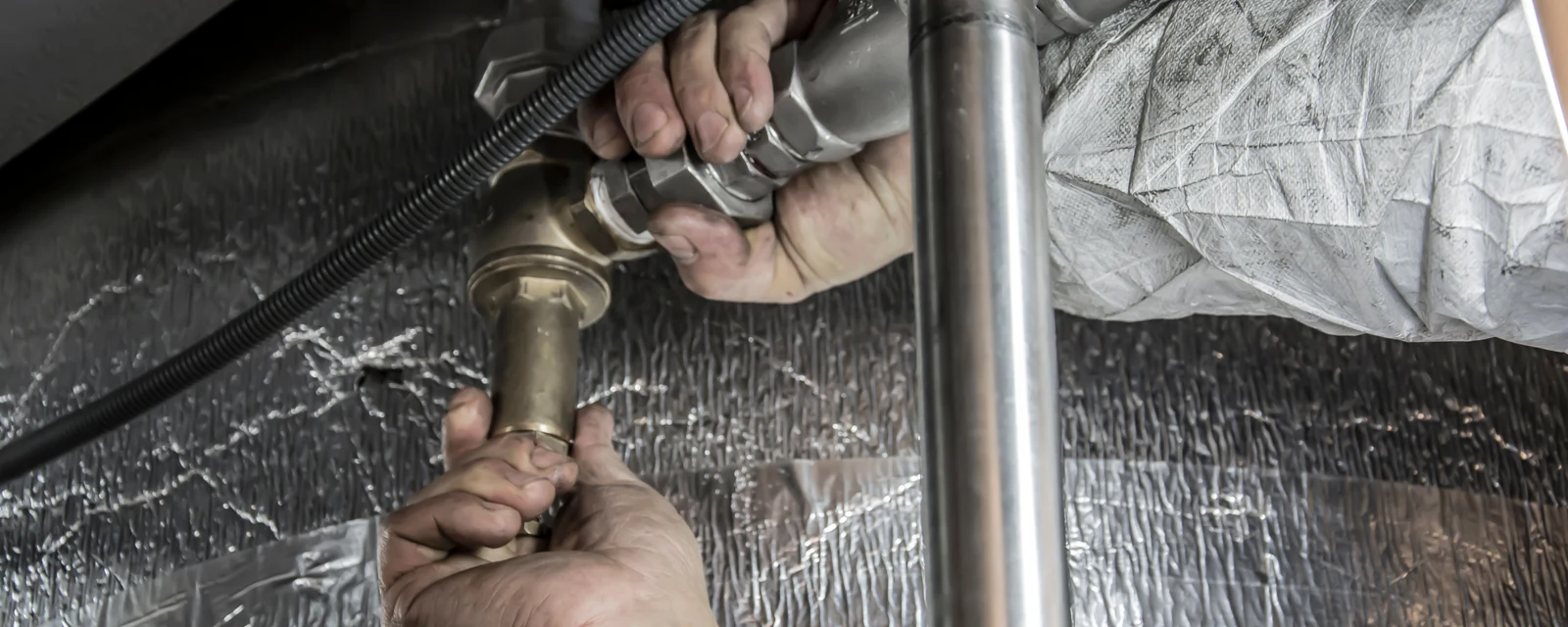
Leak detection works by narrowing down a hidden leak in stages. A plumber first proves a leak exists with a meter or pressure test. Then acoustic microphones, thermal imaging, tracer gas, or a pipe camera pinpoint the spot so only a small area is opened.
You can do the first stage yourself. Shut off every fixture, read the water meter, wait 30 minutes, longer for a slow leak, without using water, and read it again. If the numbers moved, you have a leak somewhere.
Water leaks do damage quietly. A pinhole in a copper line under a slab, a cracked joint inside a wall, or a failed fitting in the yard can run for weeks before you see a stain. The goal of detection is to find the exact leak so the repair is small.
No single tool finds everything. Plumbers choose by where the pipe runs, what it is made of, and what the symptoms suggest. Below is how each method works, what it can and cannot prove, and when to stop checking on your own and call for leak detection.
Leak detection methods side by side
Each method answers a different question. The table shows what each tool is good at and where it falls short.
| Method | What it senses | Best for | Limit |
|---|---|---|---|
| Meter or pressure test | Water moving or pressure dropping in a closed system | Proving a leak exists, and which line | Does not show the exact spot |
| Acoustic listening | The hiss or drip sound of escaping water | Pressurized lines under floors and in yards | Noise from traffic or pumps can mask it |
| Thermal imaging | Temperature difference from hot water or wet material | Hot lines, wet walls, radiant spots | Weak on cold lines with little temperature contrast |
| Tracer gas | A safe gas that escapes at the break and rises | Hard-to-hear leaks in sealed lines | Needs a sealed, emptied line |
| Pipe camera | A live video image from inside a drain | Drain and sewer line cracks and offsets | Cannot see inside a pressurized supply line or a slab |
Plumbers often combine two or three methods to confirm a leak before cutting anything open.
Stage one: prove the leak with the meter
The water meter is a free leak detector you already own. Here is how to use it.
Stop all water use
Turn off the dishwasher, washing machine, ice maker, and irrigation. Make sure no one runs a tap or flushes.
Find the meter and read it
Open the meter box lid and look for the low-flow indicator, a small triangle or dial that spins with any flow. Write down the number.
Wait and read again
Wait 30 minutes, longer for a slow leak, with nothing running. A moving indicator or a changed reading means water is leaking somewhere past the meter.
Narrow it down
Close the home's main valve and check the meter again. If it still moves, the leak is in the yard line between the meter and house. If it stops, the leak is inside the home.
Pressure testing: isolating a line
A pressure test closes off a section of pipe and watches the gauge. If the pressure holds, that section has no leak. If it falls, you have your suspect. Plumbers use this to rule lines in or out, such as the hot side, the cold side, or the slab.
It is a proof method, not a locating one. A pressure test tells you whether to keep looking in a particular branch, which is why it comes before the more precise tools.
Suspect a hidden leak?
A licensed plumber can test, locate, and mark the exact spot before any wall or floor is opened. Call (407) 964-8940 any hour. The line is open 24/7.
Acoustic and thermal tools: finding the spot
Acoustic ground microphones and contact sensors listen for the sound of water escaping under pressure. A leak in a pressurized pipe hisses, and the sound is loudest directly over the leak. A skilled technician moves the sensor in a grid to find the peak.
Thermal imaging cameras show temperature patterns. A hot water line leaking under a slab warms the floor above it. A wet wall cools by evaporation. The camera does not see through concrete. It reads the surface and the technician interprets what it means.
Winter Springs water system numbers
According to the city utility page, Winter Springs draws groundwater from the Floridan Aquifer through 8 wells and treats it by aeration and liquid chlorine. Three water plants feed the system.
A city system with that many wells and plants has a lot of pipe, and your leak can be on your side of the meter or on the city's. The meter test above helps you tell which, so you call the right party.
Source type: city utility page, winterspringsfl.org
Why symptoms point to the wrong place
Water follows the easiest path. A leak under a bathroom can show up as a stain in the hall, because the water runs along a joist or a pipe before it surfaces. A wet spot on a ceiling is rarely directly below the leak.
That is why a plumber confirms with a tool instead of cutting where the stain is. Opening the wrong spot adds drywall work and still leaves the leak running.
Mold smell, a warm patch on a floor, or the sound of water at night with nothing on are better clues than a single stain. Write down where and when you notice each sign. Those notes shorten the search.
Tracer gas and cameras: when sound is not enough
Some companies use tracer gas. Ask what method will be used. Sound-based tools can struggle on plastic lines and in tight spaces, so a second method is sometimes needed.
Cameras are for drains. A camera on a push cable shows cracks, offsets, and roots in a sewer or drain line. It cannot see inside a water supply line, and it cannot see inside a slab. If you suspect a slab leak, the camera is not the right tool.
Things you can check before you call
These simple checks rule out the common non-leaks and help a plumber arrive with a plan.
- Add a few drops of food coloring to the toilet tank and wait 15 minutes without flushing
- Look for wet spots, warm floor patches, or damp baseboards
- Check under sinks and behind appliances for drips or rust stains
- Listen at the water heater and the meter for hissing
- Check outdoor spigots and hose connections
- Note the date of the last water bill that jumped
When to stop checking and call
Call if the meter moves with everything off, if a floor feels hot, or if you hear water running behind a wall. Call if you see wet drywall, mold, or a ceiling stain, since water damage grows quickly.
Never cut into a wall near wiring to chase a leak. Water and electricity together are a shock risk, so shut off the circuit if you see water near outlets or a panel. Gas lines are different from water lines. If you smell gas, leave the building and call your gas utility or 911 first.
A camera or acoustic tool will not find every leak. Plumbers are honest about this. If one method is inconclusive, they will say so and try another.
What a detection visit should leave you with
A good visit ends with information you can act on, not just a guess.
A confirmed leak or a clean result
The plumber should say whether a leak exists and on which line. A clean result is useful too, since it rules out a costly search.
A marked location
If a leak is found, the spot is marked on the floor, wall, or yard so repair crews cut only what they need.
A repair option
You should hear the choices, such as spot repair, reroute, or replacing the line, and the reasons behind each.
Honest limits
If a tool could not give a clear answer, the plumber should say so and explain what comes next.
After the leak is found
Once the spot is located, the repair is usually small. A section of pipe may be replaced, a fitting redone, or a line rerouted around the damage. If the same line has failed more than once, repiping may be the better value.
Ask for the finding and the repair price in plain terms before work starts. Keep any photos or readings, since your insurer may ask for them. Insurance typically covers sudden accidental damage, not wear, and the repair of the failed pipe itself is usually not covered. Ask your insurer.
Questions readers ask
A simple meter and pressure test is quick. Locating a buried or slab leak takes longer, because it depends on access to the pipe and how quiet the site is. Ask the dispatcher what to expect for your home.
No. Acoustic, thermal, pressure, and tracer gas methods are non-invasive. Opening a wall or floor happens only after the leak is pinpointed, and the opening is as small as possible.
Yes. The meter test helps show which side the leak is on. If the meter keeps running after your main valve is closed, call us so we can look at the yard line, and ask the city where its responsibility ends.
No. Water leak tools do not detect gas. If you smell gas, leave the building and call your gas utility or 911 before you call a plumber.