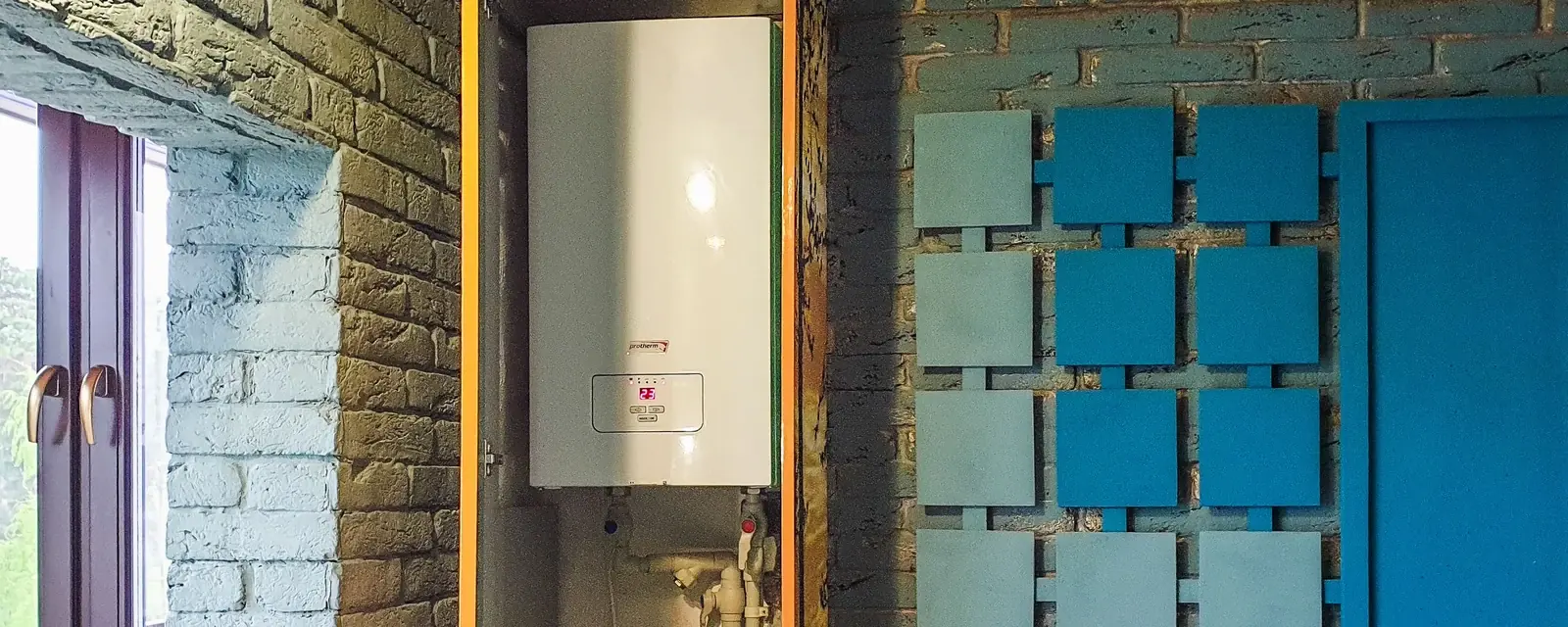
The right gas line size for a tankless water heater depends on the unit's rated input, the length of the pipe run, the fittings along it, and any other gas appliances on the same line. A licensed professional works it out against the manufacturer's data. If you ever smell gas, leave the building at once and call 911 or your gas utility from outside.
Searching for a pipe size chart is understandable, but this is one job where a number from the internet can hurt someone. Gas pipe sizing is a calculation, and the inputs belong to your house and your unit.
This guide explains why input and length matter, what goes wrong when a line is too small, and how a professional does the work. For equipment, see our tankless water heater page. We give no pipe sizes here on purpose.
Gas safety comes before anything else
If you smell gas, leave the building immediately. Do not use switches, lighters, or phones inside. From outside, call 911 or your gas utility. Wait for them to say it is safe before you re-enter, and only then call a plumber.
Do not try to find a leak by feel or by flame. Gas piping is work for a licensed professional, not a weekend project.
Why a tankless unit is hungry for gas
A tank heater warms water slowly over time with a modest burner. A tankless heater must heat flowing water to temperature in seconds, so its burner fires hard whenever a tap is open.
That means the gas line has to deliver much more fuel at one moment than it did for the old tank. A pipe that served a tank without trouble may be too small for the new unit.
What goes into sizing a gas line
A licensed plumber weighs all of these. None of them can be guessed from a chart you remember.
| Factor | Why it matters | What the pro checks |
|---|---|---|
| Unit's rated input | The burner's maximum fuel demand sets how much gas must flow | The data plate and the manual for the exact model |
| Pipe length | Longer runs lose more pressure on the way | The measured route from the meter or regulator to the unit |
| Fittings | Elbows and tees add resistance | A count of every turn along the route |
| Other appliances | Furnace, range, and dryer may run at the same time | The rated input of each appliance on the line |
| Pipe material and diameter | Wider pipe carries more gas with less loss | What is installed now and what the manual requires |
| Supply pressure | The utility delivers a set pressure that the line must hold | The regulator setup and the manufacturer's minimum |
We never quote sizing from memory. The unit's rated input and the approved sizing method are the source.
Plumbing work around the unit
Gas, water, and vent connections are planned together. Call (407) 964-8940 any hour. The line is open 24/7.
What an undersized line does
When the line cannot deliver enough gas, pressure drops at the unit when the burner fires. The heater may fail to light, shut down mid-shower, or throw an error code. Other gas appliances can also run weak when the tankless unit fires.
These symptoms can also come from a dirty burner, a bad sensor, or scale. So an error code alone does not prove the line is too small. A technician tests the pressure at the unit while it runs, which separates a supply problem from an equipment problem.
How the sizing and install steps go
The order is the same on most jobs.
Read the unit's rated input
The data plate and manual list the maximum input. This number comes from the maker, not from a rule of thumb.
Map the route
The plumber measures the pipe from the meter or regulator to the unit, counts fittings, and lists every appliance sharing the line.
Compare against the sizing method
With those inputs, the plumber uses the approved sizing tables or calculation to confirm that the pipe can carry the load. If it cannot, the plan includes a larger pipe or a new run.
Install and test
After piping, the line gets a leak test and a pressure check. Each joint is checked and the unit is run at high demand to confirm steady pressure.
Label and document
The installer notes the work and shows you the shutoff valve so you know where it is in an emergency.
Why length matters as much as diameter
Think of gas moving down a pipe like water in a garden hose. The farther it travels, the more pressure it loses to friction against the pipe wall. A short run of a given pipe can carry more than a long run of the same pipe.
This is why moving a heater from a garage corner to the far side of the house can change the answer, even when the unit is the same. Every added foot and every added elbow takes a little away.
Shared lines and the furnace problem
Many homes feed a furnace, range, and dryer from one branch. Sizing has to assume those appliances may run at the same time as the tankless unit. A shower on a cold morning while the furnace runs is exactly the moment that stresses the line.
Your plumber lists each appliance's rated input, adds them as the method requires, and sizes the shared sections for the total. Leaving one appliance off the list is how an undersized line gets built.
Reusing the old line or running new pipe
Sometimes the existing pipe is large enough and can be reused once it passes a leak test. Sometimes it is too small, too corroded, or too long, and a new branch from the meter is the cleaner fix.
A plumber also checks the flexible connector at the unit, the shutoff valve, and the regulator setup. Old connectors that were fine on a tank may not match a tankless model's requirements.
For landlords and property managers
If you manage rentals, require written sizing details from the installer, including the unit's rated input, the pipe size used, and the test results. Keep them with the unit's records.
Tenants should know where the gas shutoff is and what to do if they smell gas. Post the rule: leave, then call 911 or the gas utility from outside.
Winter Springs permits for gas work
The city building permit application lists the building department at 1126 East State Road 434 and notes that a separate permit must be secured for electrical work, plumbing, and signs. It asks for a contractor license number and qualifier.
The form does not describe gas line rules in detail, and we will not guess. Permit rules vary, so ask the Winter Springs building department what applies to a new tankless unit and its gas piping, and confirm who pulls the permit.
Source type: city building permit application
What you can do yourself, safely
Your role is to gather information and ask good questions.
Find the data plate
The unit's label or manual lists the rated input. Take a photo and share it with the plumber.
List your gas appliances
Note the furnace, range, dryer, and any outdoor equipment on the same system.
Sketch the route
A rough drawing of where the meter sits and where the unit will mount helps the plumber measure.
Install a CO alarm
Carbon monoxide alarms near sleeping areas are a sensible step with any gas appliance.
Why gas piping is not a DIY job
Gas leaks and bad joints do not announce themselves. A small leak can collect in a closed space. A wrong fitting or thread sealant can fail slowly.
Licensed plumbers test joints with approved methods and an inspector or the city may require a check. A pressure test shows whether the line holds.
Asking the right questions before you hire
Ask the installer to name the unit's rated input and show how they sized the line against it. A pro who says it will probably be fine is guessing.
Ask who handles the permit and the inspection, whether the old line will be reused, and what the leak test involves. For general installs, our plumbing installation page lists what we handle. We serve homes in Oviedo and Longwood as well as Winter Springs.
Questions readers ask
No. Charts depend on the unit's rated input, pipe length, fittings, material, and pressure, and one wrong assumption makes the result wrong. A licensed plumber sizes the line against your unit's data.
It is printed on the data plate on the unit and listed in the installation manual. Give that number to the plumber instead of guessing.
Not always, but often enough that it must be checked. Whether your existing line can carry the load depends on the pipe and the run. A pro checks before quoting.
Leave the building at once, take everyone with you, and call 911 or your gas utility from outside. Do not turn lights on or off. Once the utility clears the home, the line is open 24/7 and a licensed plumber is dispatched for plumbing repairs.
Often yes, but the shared section must be sized for every appliance that may run at the same time. That is a calculation, so have a licensed plumber do it and test the line after the work.
Our licensed plumbers handle water, vent, and gas connections for tankless installs, and a clear price is given before work starts. Permit rules vary, so ask the Winter Springs building department about requirements.