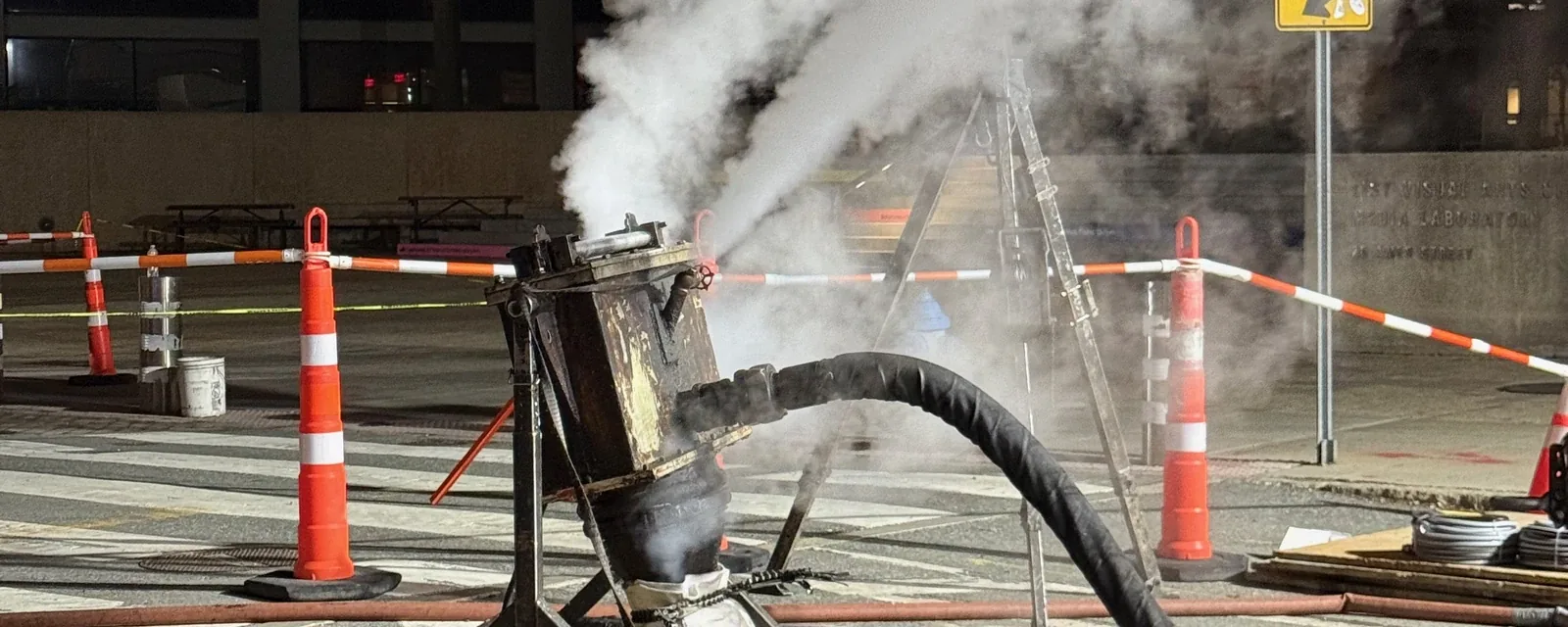
The cost of cured-in-place pipe lining depends on how much pipe is lined, the pipe diameter, how many branch connections must be reopened, what shape the old pipe is in, and how hard the work area is to reach. Prep work such as cleaning, root cutting and camera inspection also counts. Because those facts differ at every house, a reliable price comes only after a camera inspection of your line.
Cured-in-place pipe lining, often called CIPP, repairs a damaged sewer line from the inside. A flexible liner soaked in resin is pulled into the old pipe, inflated, and hardened. The result is a new pipe within the old one, without a long trench through your yard.
Homeowners ask about cost first, but cost follows condition. This article explains what moves the price, what the process involves, and when lining is the wrong tool.
How the liner goes in
The crew starts by cleaning the line. Roots, scale and grease come out with a cutting head or a water jet, because the liner needs a clean pipe wall to bond to. A camera then confirms the cleanup and measures the length.
The liner is a felt tube coated with epoxy resin. It is pulled or inverted into the pipe and pushed against the wall with air or water pressure. Heat or UV light then cures the resin into a hard shell.
Last, a cutting robot reopens any branch connections, and a final camera run checks the finished pipe. The camera recording is your proof that the work holds up.
Six things that move the price
No honest article can give a single figure for lining. Here are the real drivers, in roughly the order they matter.
Length of the lined section
More pipe means more liner, more resin, more curing time and a longer day on site.
Pipe diameter
A larger pipe needs a thicker, larger liner. Most home laterals are small, but a main line serving several fixtures may differ.
Number of connections
Every branch that joins the line must be found and reopened with a cutter. More branches mean more work.
Condition of the old pipe
Heavy root damage, offsets or sagging sections need prep or point repairs before lining can start.
Access and cleanouts
A good cleanout makes entry simple. If one must be installed, that adds a step.
Curing method and site setup
Hot water, steam and UV curing differ in equipment and time. Keeping water use down during the cure matters too.
Insurance typically covers sudden accidental damage, not wear or the repair of the failed pipe itself. Roots and age are usually wear. Ask your insurer what applies to your policy before work starts.
Our plumbers give a clear price before work starts, and it follows what the camera showed, not a flat guess.
Signs your line may be a lining candidate
Lining fits best when the pipe is damaged but still in place. Typical triggers are repeated root clogs in the same spot, a camera view of hairline cracks, or joints that have opened slightly.
Repeated backups that clear after cleaning and return within months point the same way. The cleaning proves the line can pass water, but something keeps catching debris. A camera shows whether a liner would cover that spot.
A sewer smell in the yard, or a damp patch above the line, can mean a leak in the pipe wall. That may also be repairable by lining, if the pipe shape allows.
Want a real price for lining?
A camera inspection tells you if lining fits and what it involves. Call (407) 964-8940 any hour. The line is open 24/7.
Lining or digging: the decision at a glance
The camera result decides this, not preference. These rows show the usual dividing lines.
| What the camera shows | Lining likely works | Digging likely needed |
|---|---|---|
| Cracks, small holes, root entry | Yes | Rarely |
| Joints separated but pipe still aligned | Yes, after prep | Sometimes |
| Pipe collapsed or crushed | No | Yes |
| Large offset or sharp sag | Not alone | Often yes |
| Pipe too small to pass the liner | No | Yes |
| Several repeated breaks along the run | Possibly, if aligned | Depends on shape |
A camera cannot see everything. Final scope is confirmed on site.
Winter Springs sewer and permit notes
The City of Winter Springs utility division page lists 112 miles of gravity mains in the city sewer system. Gravity pipes rely on slope to move waste, so a sag or collapsed section in a private line matters more than it might seem.
The city's building permit application says a separate permit must be secured for plumbing work. Permit rules vary, so ask the Winter Springs building department whether a lining job needs one before it is scheduled.
Source type: city utility division page and building permit application
Why the inspection comes before any price
A sewer inspection is the step that turns guesses into numbers. The camera shows the pipe length, the number of branches, the material and the damage. Without it, a lining quote is a coin toss.
Ask to see the recording. You should be able to point to the crack, the root mass or the offset and understand why the plan fits. If a company will not show the footage, find another company.
The camera also shows when lining will not work. A pipe that has collapsed cannot be relined, and a good plumber will say so before taking your deposit.
Limits worth knowing
Lining narrows the pipe slightly because the liner has wall thickness. In most cases flow is still fine, since the new surface is smooth, but a very small pipe can feel the loss.
Lining does not fix a bad slope. A belly that holds water will still hold water after lining. And lining cannot be done in a line that has not been cleared. If the camera cannot pass, the prep must come first.
Ways to keep the job simple and the price clear
Locate your cleanout before the crew arrives. A clear, reachable cleanout saves time and avoids an extra access step.
Keep a record of past backups, including dates and which fixtures were affected. That history helps the plumber target the right section.
Ask for the price to be split into inspection, prep, lining and restoration. A split price lets you compare offers fairly and see which parts are fixed and which depend on what the crew finds.
Comparing lining with a traditional dig
A traditional dig opens a trench along the pipe and replaces it section by section. It handles collapsed pipe and bad slope, and it gives you a brand new line. It also tears up lawn, driveways and landscaping.
Lining leaves most of the yard alone, since the crew works from the cleanout and a small access point. It often takes less time on site. The trade-off is that it relies on the old pipe being reasonably aligned.
Cost between the two depends on depth, surface restoration and length. A deep line under a driveway can make lining the cheaper option. A short shallow line in open lawn can swing the other way.
What to ask before you sign
Ask who inspects the line and whether you receive the video. Ask what happens if the camera finds a collapsed section partway through. Ask how branch connections are reopened and checked.
Ask what the price includes, from cleaning and root cutting to the final camera run. Ask whether any permit step applies, and who handles it. Get all of it in writing.
If you live near Lake Mary or Sanford, our licensed plumbers can inspect your line and explain the options. Our sewer line repair page covers lining and traditional repair in more detail.
Questions readers ask
Sometimes. If the line is deep or runs beneath hard surfaces, lining avoids heavy restoration costs. If the pipe is short, shallow and badly damaged, digging may cost less. The camera result decides.
Makers and installers cite long service lives, but the real figure depends on the resin, the prep and the ground conditions. Ask for the product's data sheet and any written coverage from the installer.
A sealed liner closes the gaps roots use to enter. Roots can still press on the outside, so a poorly sealed connection or a pipe end may still be a weak point. Ask how the ends and branches are sealed.
You can usually stay, but you must avoid using water that drains into the line. Plan for several hours without showers, laundry or flushing, and ask the crew for the exact window.
Digging requires it. Under Florida's Chapter 556, Sunshine 811 asks you to call at least two full business days before you dig, and online tickets can be filed at sunshine811.com any time. Lining usually avoids a long trench, but an access pit or point repair can still need a ticket.